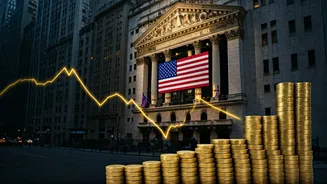

Market Downturn Explained
The US stock market recently faced a period of decline, causing ripples of concern among investors. Several factors converged to create this downturn.
One major influence was apprehension regarding the Federal Reserve's future policy moves. The market participants were reportedly wary of the central bank's potential actions, which added to the overall unease. Concurrently, the prices of gold witnessed an increase, soaring by Rs 2,000, while silver rose by Rs 10,000. These increases in precious metal prices frequently suggest investors are seeking safer havens amid economic or political instability. Additionally, global tensions, including those involving Iran, likely contributed to a sense of uncertainty and risk aversion in the financial markets. The convergence of these factors created a challenging environment for stocks, leading to the observed market pullback.
Federal Reserve Concerns
The Federal Reserve's potential actions have become a key focus for market participants. There is an anticipation of possible monetary policy shifts or decisions that could impact the market's trajectory. These anxieties contribute to the volatility seen in the stock market. Concerns regarding the Federal Reserve were reportedly exacerbated by statements made during a Senate testimony, prompting questions about potential regulatory actions. These fears added to the existing uncertainty among investors. Furthermore, a report suggested a criminal investigation against the Fed Chair, adding further layers of uncertainty and potentially influencing market sentiment and investor behavior. The central bank's stance, in this context, has the potential to influence the investment choices of a wide spectrum of market participants.
Geopolitical Instability
Geopolitical events, particularly those tied to Iran, significantly influenced market performance. Escalating tensions and potential conflicts introduced a degree of uncertainty into the financial markets. Events related to Iran, including potential military actions and retaliatory measures, weighed on investor sentiment. Investors often reduce their risk exposure in periods marked by geopolitical instability, leading to lower demand for riskier assets like stocks. Simultaneously, global dynamics contributed to market unease. The combination of these geopolitical developments served to amplify existing uncertainties, resulting in downward pressure on the stock market. This situation reflects the sensitive nature of global markets and the impact of geopolitical events.
Rising Gold Prices
The surge in gold prices to Rs 2,000 underscored the heightened level of market uncertainty. Historically, gold serves as a safe-haven asset, drawing investors during times of economic or geopolitical stress. When uncertainties increase, investors tend to move toward safe investments like gold. The sharp increase in gold prices suggests a widespread anxiety among investors. This movement toward gold is frequently interpreted as a signal of reduced confidence in other investment options. In the current context, the rising gold price mirrors a cautious sentiment and a possible flight to safety by investors amid the mentioned factors. This further indicates the market's precarious position.