






Chilli's Spicy Arrival
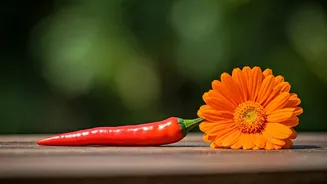
It’s hard to envision Indian culinary traditions without the zing of chilli peppers, yet these fiery pods are not indigenous to India. They embarked on their
journey to the subcontinent from the Americas, introduced by Portuguese mariners during the 15th and 16th centuries. Before their arrival, indigenous spices like black pepper and long pepper were the primary sources of heat in Indian dishes. However, chillies proved remarkably adaptable to India's diverse climates, quickly integrating into regional cuisines and becoming an indispensable ingredient across the nation, transforming the flavour profiles of countless traditional meals and snacks.
Bougainvillea's Blooming Journey
The spectacular display of bougainvillea, with its dazzling bracts in shades of pink, purple, and orange, is a common and beloved sight adorning Indian streets and compounds. However, this vibrant climber traces its origins back to the lush landscapes of South America, particularly regions like Brazil, Peru, and Argentina. Its popularity in India and other tropical and subtropical zones is largely attributed to its remarkable resilience, especially its ability to thrive with minimal water. The plant's unique structure, where colourful modified leaves called bracts surround inconspicuous flowers, contributes to its striking visual appeal and widespread cultivation as an ornamental species.
Eucalyptus from Down Under
Eucalyptus trees, often seen in India for their rapid growth, valuable timber, and use in paper production, are in fact native to Australia. These fast-growing trees, belonging to a genus with over 660 species, were introduced to India during the colonial era. Their quick maturation made them a desirable choice for afforestation and resource management. Despite their utility, environmental discussions often highlight potential ecological concerns, such as their significant water consumption, which can impact local water tables and native flora and fauna. Nonetheless, their presence is a widespread feature of the Indian landscape.
Gulmohar's Madagascar Roots
The breathtaking spectacle of the gulmohar tree in full bloom, its canopy ablaze with fiery orange-red flowers during the summer months, leads many to believe it's an ancient Indian native. However, this iconic ornamental tree's origin lies in Madagascar. Its striking visual appeal and expansive, umbrella-like canopy made it an immediate favourite for landscaping in Indian cities and on educational campuses. Introduced and widely planted across tropical and subtropical regions, including India, it has become a cherished avenue tree, celebrated for its dramatic seasonal beauty and ability to provide ample shade.
Papaya's Tropical Transplant
Papaya, a fruit widely cultivated and relished throughout India, has a history that begins far from the subcontinent. Originating in Central America and southern Mexico, this nutritious fruit was introduced to India centuries ago through maritime trade routes. Its adaptability to tropical climates and its well-known digestive benefits quickly cemented its place in Indian agriculture and diets. Notably, India now leads the world in papaya production, yielding an impressive annual output of about 3 million tonnes, showcasing its successful integration into the country's agricultural landscape.