





Salt's Natural Moisture Magnet
In a world increasingly reliant on technology, a remarkably simple yet effective home remedy for dampness has resurfaced: placing a bowl of salt in affected
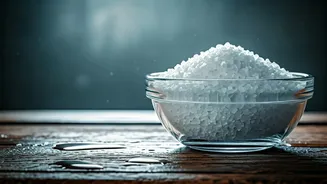
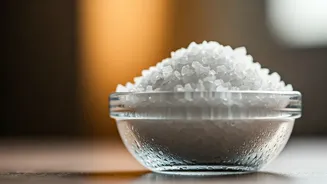
areas. This method, championed by many, particularly in India, hinges on a fundamental scientific property of salt known as hygroscopicity. Coarse salt, when left exposed in a humid environment such as a bedroom, bathroom, or basement, begins to visibly change. It clumps together, hardens, or even appears slightly wet. This observable transformation is direct evidence of the salt actively drawing moisture from the surrounding air. Sodium chloride, the chemical compound of common salt, possesses an innate ability to attract and retain water vapor from its environment. Far from being mere folklore, this phenomenon is well-documented and understood in scientific circles. The visual changes in the salt are a tangible manifestation of this chemical process, indicating its effectiveness in reducing ambient humidity.
The Science of Hygroscopicity Explained
The effectiveness of the salt bowl trick is rooted in a well-established physical phenomenon called hygroscopicity. Scientific investigations into salt's behavior in humid conditions reveal that it undergoes a spontaneous uptake of water. This process can lead to the conversion of crystalline sodium chloride (NaCl) into liquid droplets. Essentially, salt doesn't just passively exist in the air; it actively absorbs moisture from it, sometimes even dissolving into a brine as the humidity levels rise. This explains why a bowl of salt left out in a damp room gradually becomes damp itself. Moreover, studies indicate that salt not only absorbs water but can also enhance the moisture-absorbing capacity of materials around it. Research suggests that in higher humidity, salt amplifies the ability to capture moisture. This amplifying effect is precisely why the salt bowl method proves particularly beneficial in inherently damp spaces like basements or during the notoriously humid monsoon seasons, making it a surprisingly potent tool for moisture control.
From Home Hack to High Tech
The principle behind the viral salt bowl hack is so effective that it's being utilized in cutting-edge environmental technologies, particularly in water harvesting. Scientists are leveraging salt-based materials in advanced systems designed to extract water directly from the air, especially in arid regions. The core concept involves the water-binding capabilities within the salt's crystal lattice, which determines its adsorption capacity. This mechanism, though applied on a much grander scale, is fundamentally the same as what happens when a bowl of salt sits in your damp room. The sophisticated water-harvesting systems essentially amplify this natural property of salt to condense and collect water vapor. This connection underscores that the simple home remedy isn't just a quaint tradition; it's a scaled-down version of sophisticated scientific applications, proving the enduring power of elemental chemistry in solving environmental challenges.
Realistic Expectations and Limitations
While the salt bowl method is undeniably effective at absorbing a certain amount of excess moisture and can help mitigate musty odors, it's crucial to manage expectations. This humble hack should be viewed as a supplementary aid rather than a complete solution to dampness issues. It is not a substitute for essential practices like ensuring adequate ventilation, employing mechanical dehumidifiers for more significant moisture problems, or addressing underlying structural issues that contribute to dampness. Think of the salt bowl as a low-cost, passive assistant that offers some relief, but it cannot replace comprehensive dampness management strategies. Its viral appeal stems from its simplicity, zero electricity requirement, minimal cost, and visible results—the clumping salt serves as clear proof of its action—making it an attractive, sustainable option for those seeking straightforward home improvements.