
Yoga Block Basics
Yoga blocks, often rectangular in shape, are incredibly versatile tools that enhance yoga practice. They provide stability, alignment, and support, making
poses accessible to everyone, irrespective of flexibility or experience level. Beginners can use blocks to modify poses, reducing strain and building confidence. For instance, in a forward fold, placing hands on blocks can ease the stretch and promote proper form. Regular practitioners utilize blocks to deepen their poses and explore new variations. For instance, using a block under the sacrum in bridge pose can increase the stretch. Blocks are also used in restorative yoga to support the body in comfortable positions, promoting relaxation and healing. Made from various materials, including foam, cork, and wood, they’re generally lightweight and easy to carry. The choice of material often influences the block's firmness and feel. Ultimately, yoga blocks improve alignment and help create space within the body. Their use helps yogis of all levels achieve their full potential.
Block Selection Criteria
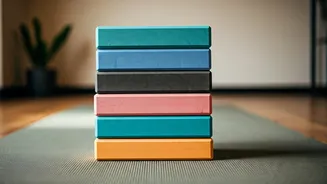
When selecting yoga blocks, multiple factors come into play. Material choice significantly influences the block's feel and durability. Foam blocks are lightweight and soft, ideal for beginners, but they might wear down faster. Cork blocks offer a firmer grip, providing better support and stability, while wooden blocks are the most durable option but are also the heaviest. The dimensions of the block matter too. Standard blocks are often 9 x 6 x 4 inches, but smaller or larger blocks can accommodate different body sizes and pose preferences. Consider the block's density – denser blocks are more supportive and stable, suitable for advanced poses or heavier individuals. The edge design also matters, as rounded edges are more comfortable when grasping and leaning on the block. The block's weight plays a role in portability; lighter blocks are easier to carry, especially for travel. Finally, it’s advisable to check reviews and compare prices to ensure the block aligns with your budget and preferences.
Top Rated Options
Numerous yoga block options are available in India for under ₹1000. These blocks frequently offer a mix of comfort, functionality, and cost-effectiveness. Several models are made of high-density foam, ensuring support while being gentle on the body. Some include features like beveled edges for enhanced grip and comfort, and non-slip surfaces for safety. Certain brands provide blocks in sets, allowing practitioners to purchase two blocks at once. These sets are often available in a variety of colors to match personal preferences. Consider blocks made from durable, yet lightweight, materials for easy portability. These blocks are ideal for both home practice and studio use. Read customer reviews carefully to determine the block's durability and overall performance before buying. Some brands offer online purchasing, making blocks easily accessible from anywhere in India, while others can be found at local stores. Compare the materials and features, ensuring that the chosen blocks meet your needs and support your yoga journey.
Beginner Benefits
Yoga blocks offer significant advantages for beginners. They help to modify poses, making them accessible to individuals with limited flexibility or physical strength. For example, in poses such as triangle or forward folds, blocks under the hands can shorten the distance to the floor, allowing the beginner to maintain a correct alignment without overstretching. Using blocks ensures the spine remains in alignment. This assists in preventing injuries and increases the safety of the practice. Blocks provide support and stability, boosting confidence and promoting the correct form. Beginners often find that blocks enhance their body awareness, allowing them to feel the stretch accurately and deepen their practice progressively. Blocks aid in building a strong foundation and encourage consistency by making poses less intimidating. They help beginners to gradually gain flexibility, which, in turn, allows for safer transitions into more advanced poses. Finally, the use of blocks helps in understanding the mechanics of each pose and allows for a more personalized yoga practice.
Advanced Practice Support
Even experienced yoga practitioners can derive benefits from using yoga blocks. They are particularly helpful for deepening stretches and exploring more advanced variations of poses. For example, in a bridge pose, placing a block under the sacrum enhances the backbend and provides a deeper stretch in the chest and shoulders. In seated forward folds, the block can assist in achieving greater spinal extension, increasing the stretch and improving alignment. Blocks support balance poses, such as half-moon pose, offering a stable point of contact for the hand, enabling greater stability and confidence. They can also provide a challenge by encouraging deeper engagement of supporting muscles. Advanced practitioners use blocks to refine their alignment, ensuring proper form, and improving body awareness. Blocks help in variations of poses, thus pushing the body to its limits. Regular practitioners can also utilize blocks for restorative yoga, supporting the body in comfortable positions. This promotes relaxation and helps in recovering after intense workouts. Ultimately, blocks facilitate a more refined and purposeful yoga practice, irrespective of the level of expertise.
Materials and Care
Yoga blocks come in different materials, each with unique properties and care requirements. Foam blocks are typically made from lightweight materials and are easy to clean, often needing only a wipe-down with a damp cloth and mild soap. Cork blocks, renowned for their firm grip and eco-friendliness, require similar cleaning methods, but should be dried completely to prevent moisture-related damage. Wooden blocks provide the highest durability but necessitate greater care; a simple wipe with a dry cloth is usually sufficient, with occasional use of wood protectant for longevity. Regardless of the material, it is important to prevent exposure to direct sunlight for extended periods to avoid discoloration or damage. To increase the lifespan of your yoga blocks, store them in a clean, dry place when not in use. Regularly check for any signs of wear and tear, and replace blocks if they begin to show significant degradation. Following these care tips will help in ensuring your yoga blocks provide support and stability for an extended period, thus optimizing your yoga practice.
Purchasing and Usage
To purchase yoga blocks, various options are available in India. Online marketplaces provide a wide variety of brands, materials, and price points, offering the convenience of home delivery. Local yoga studios and fitness stores often carry blocks, which allow you to examine the block's feel and quality before buying. Major sports retailers also stock yoga blocks, providing another option to compare different models. Read customer reviews and compare specifications like size, material, and density prior to making your selection. Consider purchasing a set of blocks to provide added versatility. Once you've acquired your blocks, experiment with different poses and placements to determine what works best for your needs. Always prioritize safety and align the blocks to support your body's specific requirements, and do not force positions beyond your physical capability. Proper usage involves utilizing blocks to modify poses, provide support, and to help improve alignment. With practice and experimentation, yoga blocks will become essential aids in enhancing your yoga experience.
Essential for Practice
Yoga blocks are essential tools for a comprehensive practice. They enhance alignment, by helping practitioners achieve the correct form in various poses. Blocks provide support, allowing individuals of all fitness levels to participate safely and effectively. They are especially helpful for beginners, enabling them to modify poses without straining. They are also helpful for experienced yogis, enabling deeper stretches and exploring more advanced variations. Yoga blocks promote body awareness, as practitioners begin to understand how their body functions in specific poses. They also enhance balance and stability, supporting challenging poses like half-moon. Yoga blocks are versatile and can be used in numerous asanas, making them invaluable for a holistic yoga experience. They are relatively inexpensive and can be found across India, making them easily accessible. Integrating blocks into a routine helps to customize and improve the effectiveness of the yoga practice.