






New Era of Space Threats
Space security is no longer a fringe topic; it's a crucial policy issue. With our increasing dependence on satellites for everything from communication
to defense, the ability to disrupt these space assets has become a significant concern. A recent assessment highlights that any interference with space systems now carries immediate and serious consequences, impacting military operations, economic stability, and political relations. The tools capable of causing such disruptions are also becoming more widespread, with more countries developing and fielding these technologies. This report categorizes these counterspace capabilities into five main types: direct-ascent weapons like ground-launched missiles, co-orbital systems that can maneuver near other satellites, electronic warfare for jamming and spoofing signals, directed-energy weapons such as lasers, and cyber warfare tools. The potential use of these offensive capabilities could lead to long-lasting global issues, including the loss of essential services and the creation of dangerous space debris fields that could linger for decades, posing a risk to all spacefaring nations. Over the past ten years, governments have grown more worried about their vulnerability to disruptions in space, pushing the topic of space security into mainstream defense planning discussions, with some nations openly considering the possibility of future conflicts extending into orbit.
Broader Actor Engagement
Previously, discussions about counterspace technologies primarily revolved around major powers like the United States, China, and Russia. However, the latest analysis indicates a much wider range of countries are actively involved in developing capabilities related to space security. Many nations are investing in technologies designed to support these missions, including advanced electronic warfare systems, sophisticated cyber tools, and satellites capable of complex orbital maneuvers. While these capabilities are often presented as defensive measures, intended to safeguard national assets and improve monitoring of activities in space, they also serve as a deterrent. By signaling an ability to retaliate, countries aim to discourage potential adversaries from interfering with their space infrastructure. This development signifies a global trend towards enhancing space situational awareness and protecting vital assets in orbit.
Advanced Systems Emerge
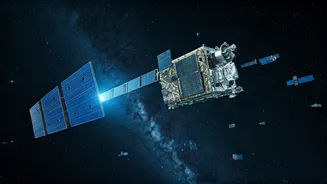
Beyond electronic and cyber capabilities, there's growing interest in more advanced and innovative systems. These include reusable spaceplanes and what are often termed "bodyguard" satellites. The U.S. military's X-37B spaceplane has set a high standard, demonstrating the ability to conduct long-duration missions, carry various payloads, and return to Earth for refurbishment and reuse. China has also made significant progress with its own experimental spaceplane, suggesting a parallel development in this area. India, France, and Germany are also exploring similar spaceplane concepts, indicating a global pursuit of such advanced reusable spacecraft. In parallel, several countries are developing satellites designed to operate in close proximity to other high-value spacecraft. These "bodyguard" satellites build upon technologies initially developed for servicing and inspecting satellites in orbit. Japan and Germany, among others, are working on these capabilities. Such systems can be used for monitoring nearby objects, providing a security presence, or potentially complicating access to sensitive assets, further blurring the lines between defensive measures and offensive counterspace operations.