
Road to the Pad
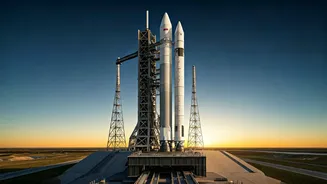
The Space Launch System (SLS) rocket, the powerhouse behind NASA's Artemis 2 mission, embarked on its journey from the Vehicle Assembly Building (VAB)
to Launch Complex-39B (LC-39B) at Kennedy Space Center (KSC) in Florida on Saturday, January 17th. This marked the first time the fully assembled launch vehicle made this trek. The SLS, standing tall on its Mobile Launch Platform (MLP), began its 4-mile (6.4 kilometers) journey at 7:04 a.m. EST (1204 GMT). The MLP's massive 7.5-foot (2.3 m) treads guided the rocket from the VAB's High Bay 3 onto a river-rock-covered road. After a carefully orchestrated move, the rocket reached LC-39B at 6:42 p.m. EST (2342 GMT). This rollout was a culmination of a year and a half of engineering work to stack the Artemis 2 SLS, signifying a major milestone for the upcoming mission and a visual spectacle for onlookers and enthusiasts alike.
A Historic Mission
The Artemis 2 mission represents a pivotal moment in space exploration, as it will send astronauts around the Moon. This mission will be a crucial precursor to the Artemis 3 mission, which plans to land humans on the lunar surface. The successful rollout of the Artemis 2 rocket to the launch pad signifies the mission's progress. As the rocket awaits launch, engineers and mission planners are meticulously reviewing every detail to ensure a safe and successful journey. The Artemis program aims not only to return humans to the Moon, a feat last accomplished in 1972, but also to establish a sustainable human presence there. This involves developing the technologies and infrastructure necessary for long-term lunar exploration and potentially setting the stage for future missions to Mars and beyond. The year 2026 is highlighted as a significant year, when humanity may once again walk on the lunar surface.
Preparing for Launch
The rollout of the Artemis 2 rocket is just one step in the complex preparation for launch. Throughout the process, engineers and technicians conduct extensive testing and checks. These tests ensure all systems function correctly. They assess the rocket's structural integrity, as well as the functionality of the propulsion systems. Also included are all the life support systems for the astronauts. The Artemis 2 astronauts themselves undergo intensive training, including simulations of launch day and scenarios they might encounter during the mission. They train in the Orion spacecraft, practicing maneuvers, and learning emergency procedures. Mission controllers also conduct extensive simulations, preparing for various scenarios and contingencies that may arise. They coordinate with international partners and the mission team, preparing to handle potential issues. This meticulous preparation underscores NASA's commitment to safety and the success of the Artemis 2 mission, which is expected to lift off within a few weeks.
Future Moon Missions
Looking beyond the Artemis 2 mission, the Artemis program outlines a series of increasingly ambitious missions to the Moon. The next step is Artemis 3, which aims to land astronauts on the lunar surface. This will be the first human lunar landing since the Apollo program. NASA plans to establish a base camp on the Moon, a gateway for further exploration. The Artemis program involves partnerships with commercial companies and international space agencies. This collaborative approach is intended to pool resources and expertise. This effort will accelerate the pace of lunar exploration and ensure sustainable presence on the Moon. Private spacecraft companies are also involved. Some are planning lunar landings in 2026, further highlighting the widespread interest in space exploration. This multifaceted approach is expected to usher in a new era of lunar exploration. This will drive innovation and inspire the next generation of space explorers.