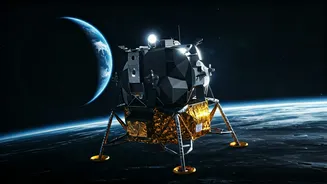








Artemis Program's Ascent
The Artemis program is set to be a key highlight. Anticipation is building for the Artemis 2 mission, which may launch astronauts around the moon. The program aims
to land humans on the moon. Discussions are underway regarding the potential transfer of the Space Shuttle Discovery to Texas, a move that would see the iconic spacecraft potentially moved to Texas, which could change how future space exploration is handled. Furthermore, the Apollo 8 moonshot of 1968, and whether Artemis 2 could achieve a similar feat in 2026, is under deliberation. The year could mark a pivotal moment in the Artemis program, shaping future lunar missions and the direction of space exploration.
Private Lunar Landings
2026 will see multiple private spacecraft attempting lunar landings. This signals a shift toward commercial involvement in space exploration, opening up new avenues for research and resource utilization. The efforts of private spacecraft to land on the Moon are a sign of the rise in commercial space endeavours and the potential development of the lunar resources. This includes potential collaborations and the creation of new technology for space exploration. This influx of commercial entities could lead to increased innovation, lower costs, and a more diverse range of lunar missions.
Next-Gen Telescopes Unveiled
Advanced telescope development is a significant focus, with the former CEO of Google leading the way. The telescopes will include three on Earth and one in space. The expansion of these advanced tools will greatly improve our capability to observe the cosmos. These telescopes are predicted to yield unprecedented images and data, revolutionizing our comprehension of the universe's past, present, and future. These new telescopes will provide a wealth of data about celestial bodies, expanding our understanding of the universe.
SpaceX and NASA Contracts
The contract between SpaceX and NASA for the Artemis 3 astronaut moon-landing mission could be in jeopardy. There are concerns of delays within SpaceX, however, the Artemis program continues to make advancements. The US is vying to beat China to the moon, and space exploration will likely be highly competitive in the coming years. Furthermore, NASA’s budget has been proposed for $24.4 billion by Congress.
Mars Sample Returns
Returning Mars samples before China is a priority. This highlights the competitive spirit of space exploration and the desire to stay ahead in scientific discovery. Additionally, this further highlights the scientific value of this mission and the drive to explore Mars. This race to retrieve Martian samples underscores the strategic and scientific significance of space exploration.