

The Heart of Punjabi Festivities
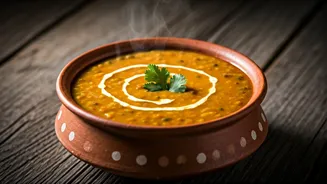
Maa Ki Dal, also affectionately known as Dal Makhani, stands as a cornerstone of Punjabi culinary heritage, especially cherished during festive occasions
like Baisakhi. This dish is revered for its incredibly rich and velvety texture, achieved through a meticulous slow-cooking process. Chef Kunal Kapur’s inspired rendition brings this beloved lentil preparation into home kitchens, offering a taste of authentic Punjabi comfort and celebration. The recipe combines whole black lentils (urad dal) with red kidney beans (rajma) to create a deeply satisfying and flavourful curry, perfect for sharing with loved ones during the vibrant Baisakhi festivities. It embodies the warmth and generosity characteristic of Punjabi hospitality, making it an indispensable part of any grand meal.
Essential Ingredients for Richness
Crafting Chef Kunal Kapur's Maa Ki Dal requires a thoughtful selection of ingredients, starting with the foundation: 1 cup of whole black lentils (urad dal) and 1/4 cup of red kidney beans (rajma). These legumes are the soul of the dish, providing its characteristic texture and earthy flavour. For the aromatic base, you'll need 1 large onion, finely chopped, 1 tbsp of ginger-garlic paste, and 2 pureed tomatoes. The spice symphony includes 1 tsp red chilli powder, 1/2 tsp turmeric powder, 1 tsp coriander powder, and 1/2 tsp garam masala. A touch of fragrance comes from 1 tsp cumin seeds, 1/2 tsp asafoetida (hing), and 1/4 tsp crushed kasoori methi (dried fenugreek leaves). To finish, 1/4 cup of fresh cream lends unparalleled creaminess, while ghee or butter and salt are used for sautéing and seasoning. The recipe also highlights the use of mustard oil for a distinct Punjabi pungency, along with chopped ginger, garlic, onion, black pepper powder, and heeng during the initial boiling phase, contributing layers of complex flavour.
Mastering the Slow Cook
The journey to a perfect Maa Ki Dal begins with meticulous preparation. First, thoroughly rinse the whole black lentils and kidney beans, then let them soak for a minimum of 4 hours, or ideally, overnight, to ensure they soften beautifully. Drain the soaked legumes and place them in a pressure cooker with 4 cups of water and 1 tsp of salt. Cook for approximately 15-20 whistles on medium heat, or until the lentils and beans reach a supremely soft, mushy consistency. After the pressure releases, gently mash the cooked dal with the back of a ladle to enhance its creaminess; add a little hot water if the mixture appears too thick. An alternative method involves pressure cooking the dal with chopped ginger, garlic, onion, heeng, black pepper powder, and mustard oil for about 50-55 minutes until very soft and creamy. This slow, patient cooking is what imbues Maa Ki Dal with its signature depth and luxurious texture, distinguishing it from simpler lentil preparations and echoing the home-style cooking methods passed down through generations.
Crafting the Flavorful Tadka
Once the lentils are tender and perfectly mashed, the next crucial step is preparing the flavourful tadka, or tempering. In a separate pan, heat 3 tbsp of ghee over medium heat until it shimmers. Introduce 1/2 cup of finely chopped onion to the hot ghee and sauté until it achieves a beautiful golden-brown hue. This browning caramelizes the onions, adding a delightful sweetness and depth to the tadka. Next, incorporate 2 tsp of Kashmiri chilli powder for a vibrant colour and mild heat, 1 tsp of cumin powder for its earthy notes, a generous pinch of garam masala for warmth, and a similar pinch of crushed kasuri methi for its distinctive aroma. Mix these spices quickly into the sautéed onions, ensuring they don't burn. This aromatic mixture is then immediately poured over the cooked dal, creating a final burst of flavour. Allowing this tadka to meld with the dal for at least an additional 2 minutes enhances the overall taste profile, culminating in a truly authentic Punjabi experience.
The Finishing Touches
To elevate the Maa Ki Dal to restaurant-quality perfection, a few final, artful touches are essential. After the tadka has been incorporated and simmered briefly with the dal, the time comes to enrich the dish with dairy. Stir in 1/4 cup of fresh cream just before serving. It's crucial to remember that the dal should not be boiled after the cream is added, as this can cause it to curdle and diminish its smooth texture. This final addition imparts a luxurious, velvety mouthfeel that is characteristic of authentic Dal Makhani. For a final flourish, garnish the dal generously with fresh coriander leaves, adding a pop of colour and a hint of freshness. Serve this exquisite Maa Ki Dal piping hot, accompanied by warm naan, kulcha, roti, or fluffy rice, allowing its rich flavours and creamy texture to be fully appreciated as a festive centrepiece.