





The Robot's New Guardian
The rapidly advancing world of robotics is ushering in unexpected job titles, and 'robot babysitter' is one of the newest. At a South Carolina factory,
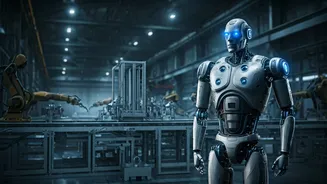
a humanoid robot named Digit is performing its duties on an assembly line for eight hours daily. This sophisticated bipedal machine operates a stamping press under the close observation of a human contractor. Currently, Digit is situated within a protective plexiglass enclosure. This safety measure is in place because the robot, as reported, lacks the ability to detect human presence, necessitating its containment. However, this is expected to change by the close of the year, paving the way for closer, more direct collaboration between human employees and these advanced robotic counterparts on the factory floor.
Economic Shifts on the Horizon
As companies like Schaeffler explore the potential of humanoid robots for various manufacturing tasks, the question of their impact on human employment looms large. The company behind Digit, Agility, has indicated that the current operational cost for these robots ranges from $10 to $25 per hour, depending on their specific deployment within a factory. Looking ahead, Agility's co-founder has stated a strategic objective to reduce this cost significantly, aiming for a mere $2 to $3 per hour. This stark contrast with existing entry-level positions, which at the Cheraw plant begin at $20 per hour, presents a clear economic incentive for businesses. The relentless pursuit of efficiency in manufacturing suggests that as humanoid robots become more cost-effective, they may pose a competitive alternative to human labor.
Global Robot Integration
The integration of humanoid robots in manufacturing is not an isolated phenomenon; successful trials are occurring worldwide. Earlier this month, it was revealed that a Chinese company, Xiami, has effectively deployed two humanoid robots within its electric vehicle production facility in Beijing. Similar to the Digit robot's initial setup, these machines were also initially confined within plexiglass enclosures for safety. However, the accelerated pace of innovation in the robotics industry suggests that such physical barriers may soon be dismantled. This rapid progression indicates a growing trend towards closer human-robot interaction and collaboration across global manufacturing sectors.