






Decentralized Dining System
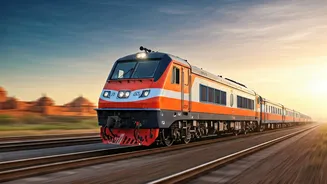
In the 1990s, Indian Railways' catering wasn't a unified operation. Instead, each railway zone managed its own food services independently, leading to
a diverse, albeit unstandardized, culinary experience across the vast network. This decentralized approach meant that the food available varied significantly depending on the specific route, the operating zone, and even the personnel on duty. While pantry cars on trains were responsible for onboard cooking, major railway stations often had refreshment rooms that supplemented the offerings. Furthermore, private contractors played a role in catering, particularly on heavily trafficked routes, adding another layer to the varied food landscape. This lack of a central command for food services meant that passengers encountered different menus and preparation styles throughout their journeys, creating a unique, regional flavor for train dining that differed greatly from today's standardized systems.
Classic Meal Compositions
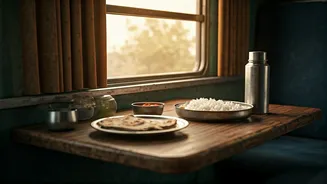
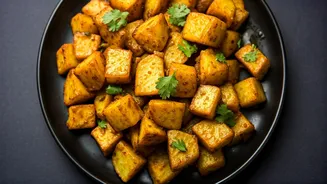
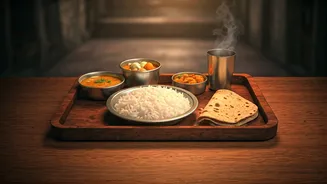
The staple vegetarian meal served on Indian Railways during the 1990s was a straightforward yet satisfying thali. This typically featured a generous portion of rice or a few chapatis, accompanied by a simple preparation of yellow dal and a seasonal vegetable dish, such as aloo gobi or beans. A small dollop of pickle completed the meal, providing a tangy contrast. These dishes were deliberately chosen for their robustness and ability to withstand the conditions of onboard reheating in moving pantry cars. For longer train journeys, rice-based options like vegetable pulao or comforting khichdi were frequently offered, prized for their ease of preparation, filling nature, and ability to provide warmth and sustenance. These meals, served in durable steel trays or melamine plates, were designed for practicality and longevity, ensuring they could handle the rigors of train travel.
Regional Breakfasts
One of the most delightful aspects of train travel in the 1990s was the regional variation in breakfast offerings, reflecting the diverse culinary traditions of India. Depending on the geographical location of the train's route, passengers could anticipate distinct morning meals. In the northern parts of the country, a common breakfast choice might have been flaky aloo parathas served with a side of cooling curd. Traveling southwards, mornings on the train typically brought lighter yet equally popular options like steaming idli, savory upma, or the comforting rice and lentil dish, pongal. Regardless of the specific zone or route, a consistent breakfast item that was almost always available across the board was a simple offering of bread and butter, providing a familiar and accessible option for all passengers.
Station Snack Delights
The excitement of train journeys in the 1990s was significantly amplified by the vibrant array of snacks available from station vendors. As trains pulled into even smaller stations, the air would fill with the calls of vendors hawking their wares, offering popular treats like crispy samosas, spicy kachoris, savory cutlets, and neatly prepared sandwiches. At larger junction stations, passengers had a brief but crucial window of opportunity to lean out of their windows and quickly procure hot, fresh pakoras or vadas, often wrapped in simple newspaper. These impromptu culinary acquisitions were a quick, sometimes messy, but always memorable part of the travel experience, adding a dash of spontaneous joy and flavor to the journey itself, far beyond the onboard pantry offerings.
Non-Vegetarian Fare
While vegetarian options dominated the Indian Railways menu in the 1990s, non-vegetarian dishes were certainly available, though their variety was more limited. Omelettes were a relatively common sight on the breakfast menu, offering a protein-rich start to the day. For those on longer journeys, egg curry, typically served with rice or rotis, provided a more substantial non-vegetarian option. If the pantry car had sufficient space and ingredients, a simple chicken curry might also find its way onto the menu, offering a taste of home for many travelers. Certain routes, particularly those with more developed kitchen facilities, might have even featured chicken biryani. Mutton dishes, however, were less commonly found on the train itself, with passengers more likely to find them at station canteens or restaurants rather than within the confines of the moving pantry car.
Sweet Endings and Hydration
The sweet treats offered on Indian Railways in the 1990s were simple yet deeply satisfying, providing a comforting end to a meal or a pleasant snack. Popular choices included the flaky, sweet soan papdi, rich gulab jamun served in convenient syrup tins, and aromatic besan laddoos. Many passengers also opted to bring their own biscuits, either for personal consumption or to share with fellow travelers, adding a communal element to the journey. Fruit vendors were a common presence at major stations, especially offering readily available bananas and oranges. Regarding hydration, bottled water was not yet ubiquitous. Most passengers relied on carrying their own flasks of water or refilling reusable bottles at the taps available on platforms. The concept of a standardized, nationwide railway water brand was still some years away from becoming a reality.