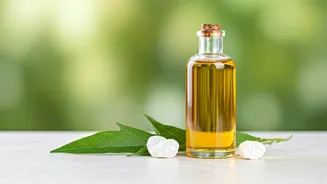








Scalp's Cooling Companion
As the summer heat intensifies, so do scalp issues like persistent itching and the unwelcome return of dandruff, often exacerbated by rising humidity and sweaty
conditions. While numerous products promise relief, a time-tested, home-based remedy offers an effective and economical solution. This DIY camphor hair oil is not just about a refreshing sensation; it actively addresses common scalp discomforts. Camphor's unique properties provide immediate relief from heat-induced irritation and itching by interacting with nerve endings. Furthermore, its inherent antibacterial and antifungal qualities are instrumental in combating dandruff, which tends to flourish in humid weather. Beyond these benefits, the distinct tingling effect stimulates increased blood circulation to the hair follicles, ensuring that vital oxygen reaches the roots, thereby minimizing hair fall and promoting a healthier environment for hair growth.
Essential Ingredients Unveiled
Creating this potent hair elixir requires only two fundamental components, readily accessible and budget-friendly. The first is organic coconut oil, serving as the nourishing base and carrier for the camphor. This oil is crucial for preventing protein loss from the hair and acts as a buffer, ensuring the camphor doesn't cause skin irritation. A standard 100ml bottle of cold-pressed coconut oil typically costs between INR 150 and INR 250. The second ingredient is camphor itself, with approximately 2-3 grams needed, usually equivalent to one or two small pieces. Authentic, plant-sourced Bhimseni camphor can be found for around INR 80 to INR 120 for a small jar. A vital caution: it is imperative to use pure, edible, or Bhimseni camphor, as synthetic camphor tablets, often used for religious ceremonies, contain harsh chemicals that can severely damage your scalp and hair. Ensuring the purity of your camphor is paramount for the safety and efficacy of this treatment.
Crafting Your Hair Potion
The process of making this cooling hair oil is remarkably straightforward, with precise temperature management being the key to preserving the ingredients' integrity. Begin by pouring half a cup of coconut oil into a clean glass or steel bowl. The oil needs to be gently warmed; the most effective method is using a double boiler, which involves placing your bowl over a larger pan filled with hot water. Alternatively, if heating directly on the stove, ensure the flame is kept at the absolute lowest setting. The oil should reach a comfortably warm temperature, warm enough to touch but not hot enough to boil or smoke, as overheating will degrade its beneficial nutrients. While the oil is warming, take the back of a spoon and finely crush the camphor pieces into a powder. Once the oil is adequately warm, remove it entirely from the heat. Add the crushed camphor to the oil and stir consistently until the powder is fully dissolved. Allow the mixture to cool down to room temperature before transferring it into a clean applicator bottle or jar for storage and use.
Optimal Application Method
When it's time to apply the prepared camphor hair oil, focus your attention exclusively on the scalp and roots, rather than the lengths of your hair. Dispense a small amount of the cooled oil and, using gentle, circular motions, massage it directly into your scalp. Concentrate on areas prone to excessive sweating or itchiness, such as the nape of your neck. Leave the oil on for a duration of 30 to 60 minutes; you should begin to experience an immediate, pleasant icy and tingling sensation. Following this treatment period, thoroughly wash out the oil using a mild, gentle shampoo. It is advisable to use this treatment only once or twice a week, as daily application can be excessive and potentially lead to scalp dryness. Given camphor's potency, performing a patch test behind your ear before applying it to your entire scalp is a prudent measure. If you notice any burning or significant redness, rinse it off immediately.