



Cosmic Danger Lurks
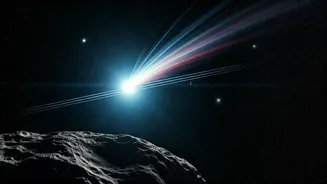
The threat of an asteroid impact, a scenario often depicted in fiction, is a very real concern for scientists. NASA officially designates objects as potentially
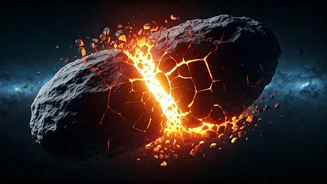
hazardous if they exceed 460 feet in diameter and have orbits that bring them within 4.7 million miles of Earth. The field dedicated to mitigating these dangers is known as 'planetary defense.' A remarkable proposal emerging from the University of California, Santa Barbara, offers a direct and decisive solution: to pulverize these threats. This program, aptly named 'Pulverize It,' envisions a system capable of shattering most asteroids into harmless fragments using already-developed rocket and projectile technologies. Professor Philip Lubin, the lead investigator, asserts that the necessary technology is readily available, yet a comprehensive planetary defense system remains unimplemented, despite the clear and present danger posed by near-Earth objects.
Beyond Deflection Tactics
Historically, planetary defense has concentrated on deflecting asteroids, altering their trajectory just enough to avoid Earth. NASA's Double Asteroid Redirection Test (DART) mission successfully demonstrated this by impacting the moonlet asteroid Dimorphos in September 2022, changing its orbital path. However, this method relies heavily on early detection; the farther in advance a hazardous asteroid is identified, the more successful deflection becomes. Smaller asteroids are more amenable to this nudge, but larger ones, akin to a semitruck, cannot be easily diverted by such gentle interventions. Furthermore, scenarios exist where asteroids are detected too late for deflection to be a viable option, posing a significant challenge. The 'Pulverize It' initiative departs from this indirect approach, aiming instead to break apart asteroids completely, much like the gameplay in the classic arcade game of the same name.
The Pulverization Method
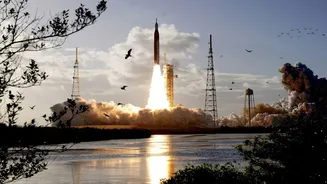
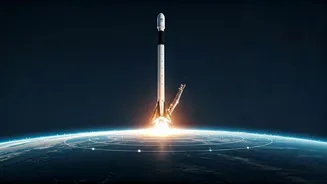
The 'Pulverize It' strategy proposes utilizing established rocket technology, such as SpaceX's Falcon 9, known for its numerous successful launches. This rocket would transport 'penetrators,' specialized projectiles designed to fragment the asteroid. For less formidable threats, these could be simple tungsten bullets. However, for more significant dangers, a nuclear explosive might be deployed after drilling a hole with tungsten bullets. This multi-faceted approach is designed to address a wide range of asteroid threats. While the nuclear option presents complexities due to international agreements restricting nuclear weapons in space, the core focus of the research team, led by Lubin and researcher Sasha Cohen, is on the physics and engineering required for asteroid disintegration. Cohen has been instrumental in running simulations on NASA supercomputers to determine the precise mass and velocity needed for penetrators to break apart asteroids of varying sizes and under different warning times.
Fragment Fate and Safety
A critical consideration for 'Pulverize It' is the fate of the asteroid fragments. The program aims to break asteroids into pieces ideally between 13 and 16 feet in diameter, with an upper limit of about 50 feet. This size is intended to ensure that the fragments burn up completely upon entering Earth's atmosphere, preventing any impact on the ground. However, even the atmospheric entry of these smaller pieces could generate acoustic shock waves and bright optical flashes, potential hazards that researchers like Brin Bailey are simulating to minimize any disruptive effects. Additionally, if a nuclear explosive is used, Bailey's work includes simulating potential radiological effects to confirm that any falling debris would not pose a radiation risk. Current terrestrial studies suggest Earth's atmosphere is capable of dissipating the energy from these fragments effectively, safeguarding life and property below.
From Plan to Action
It is crucial to understand that 'Pulverize It' is currently a conceptual plan, not an operational planetary defense program. The field itself largely remains within the scope of scientific research, with NASA leading much of the effort in the United States. Professor Lubin advocates for transitioning this research into concrete action. Discussions are ongoing regarding which entity should lead such an initiative, with some experts suggesting the Department of Defense. Lubin sees 'Pulverize It' as a potential component of broader defense frameworks, drawing parallels to missile defense systems. His ultimate vision is to have a 'Pulverize It' system perpetually ready for deployment, rather than reacting to threats after they are detected. This proactive stance is seen as a more effective approach than the current reactive strategy of waiting for a threat and then convening meetings to decide on a course of action. Preparedness, whether through pulverization or other means, is considered paramount.