



Batter Basics Unveiled
The cornerstone of excellent dosas is the batter, and its foundation is in the careful preparation of the rice and urad dal. Commence by washing the rice and urad dal a couple
of times to get rid of any dust or impurities, which also guarantees a whiter batter. Rice should be soaked separately for at least five hours, or ideally overnight, while urad dal and fenugreek seeds should be soaked together for about four hours. The poha (flattened rice) should be soaked just half an hour before grinding. For the right proportions, use a quarter kilo of urad dal for every kilo of rice. If using cups, one cup of urad dal is sufficient for four cups of rice. These careful preparations ensure a batter that sets the stage for flawless dosas.
Grinding the Ingredients
The method of grinding is as vital as the ingredients themselves. Commence by grinding the rice and poha together until the mixture turns smooth. Then, integrate the urad dal and fenugreek seeds, processing until you attain a buttery texture. Combine both mixtures in a big bowl and thoroughly mix by hand. The aim is to achieve a batter with a balanced consistency—not excessively watery and not overly thick. This precise process ensures the batter's quality, ultimately influencing the dosa's final texture and crispiness. Attention to these details during grinding lays the groundwork for perfect, restaurant-style dosas.
Achieving Optimal Fermentation
Fermentation is a critical step in making dosas, but the duration depends heavily on the prevailing weather. In cooler winter months, the fermentation process may take around 10 to 12 hours. Conversely, in the summer, when temperatures are higher, the batter is typically ready in approximately eight hours. It's crucial to add salt only after fermentation is complete, as adding it before could hinder proper fermentation. Batter is best fermented at room temperature; if refrigerated, remove it at least an hour before cooking to warm up and enable the dosa to spread correctly on the pan. Avoid using baking soda if the batter is well-fermented. The ideal fermentation process is crucial for achieving the perfect texture.
Perfecting the Cooking Process
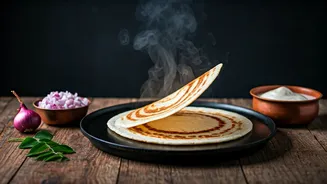
To make perfect dosas, the cooking process is just as important as batter preparation. Start by heating the pan and then lightly sprinkle it with water, wiping it with a wet cloth to ensure an even surface. Add a small amount of oil to prevent the batter from sticking and to ensure crispy dosas. Pour the batter using a ladle, spreading it from the centre to the edges to get that hotel-style finish. The right heat and technique are critical for producing perfectly golden, crispy dosas. By mastering these cooking methods, you will be able to get a perfect dosa.
Essential Proportions & Additives
To achieve those coveted golden, crispy dosas, the right proportions and added ingredients are essential. Incorporate 50 grams of poha (flattened rice) and one tablespoon of fenugreek seeds to your batter. These additions not only enhance the color but also significantly improve the flavour of your dosas. Regarding proportions, be sure to use the advised ratio of a quarter kilo of urad dal for every kilo of rice. If measuring with cups, use one cup of urad dal for four cups of rice. Paying attention to these measures and incorporating the appropriate ingredients will bring your dosa-making to the next level.