




Vinegar's Weed Wicking Power
Vinegar, a readily available household item, can indeed be employed as a DIY solution for tackling unwanted garden invaders. Its primary mechanism of action
involves dehydrating the weed, essentially burning or drying out its leaves and stems. This process hinders the plant's ability to retain moisture, leading to wilting and eventual death. The efficacy of vinegar as a weed killer is directly correlated with its acetic acid concentration; a higher percentage yields more potent results. However, it's crucial to understand that vinegar is most effective against young, nascent weeds that haven't yet developed robust root systems. While mature or perennial weeds might show signs of distress like wilting or discoloration after a vinegar treatment, they often recover because their deep-seated roots remain intact and capable of regeneration. Therefore, vinegar is best viewed as a quick-fix solution rather than a long-term eradication strategy, particularly for more established and resilient weeds.
Optimal Application Tactics
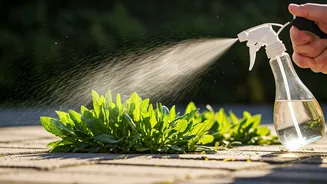
To maximize the impact of vinegar on your weeds, strategic application is key. It is generally advised not to apply vinegar more frequently than once every two weeks, allowing for assessment of its effects and preventing potential harm to your soil. The ideal conditions for application are dry weather, specifically waiting 24 to 48 hours after the last rainfall to ensure the vinegar isn't diluted or washed away. Use a spray bottle filled with vinegar and direct the spray precisely onto the target weeds. Maintaining a close proximity between the spray nozzle and the weed is essential to prevent accidental damage to desirable plants, grass, or the garden bed's soil. Rain can significantly diminish the effectiveness of vinegar, so ensuring there is no forecast of precipitation is vital for the treatment to be successful and for the weeds to be effectively controlled.
Protecting Surrounding Flora
While vinegar offers a convenient way to combat weeds, its acidic nature necessitates caution to protect your cultivated plants and lawn. The acetic acid in vinegar can cause superficial damage, appearing as minor cosmetic blemishes or scorching on the foliage of nearby plants and grass that come into contact with the spray. However, established plants with strong root systems are generally resilient and can recover from brief exposure without significant long-term harm. The key is precise application; by aiming the spray directly at the weeds and minimizing overspray, you can effectively target the unwanted growth without unnecessarily jeopardizing your healthy flora. This careful approach ensures that the weed-killing benefits of vinegar are realized while safeguarding the overall health and appearance of your garden.
Alternative Natural Weed Controls
For those seeking comprehensive weed management beyond the limitations of vinegar, several other effective, natural methods can be integrated into your gardening practices. Hand-pulling weeds, a hands-on approach, is exceptionally effective as it removes the entire plant, including its root system, significantly reducing the likelihood of regrowth. Another simple yet potent method is sprinkling salt directly onto weeds; its dehydrating properties work similarly to vinegar, causing the weeds to dry up and wither. If salt isn't readily available, baking soda serves as a viable alternative due to its own salt content, effectively achieving the same result of weed desiccation. For larger patches of dense weeds, smothering them with a black tarp is a highly efficient technique. By blocking sunlight, the tarp prevents the weeds from photosynthesizing, ultimately leading to their demise. These methods can be used independently or in conjunction with vinegar for a robust, eco-friendly weed control strategy.