



Glycemic Impact Revealed
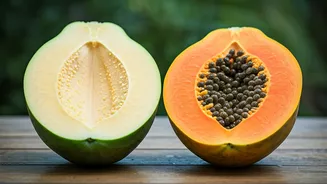
When considering blood sugar management, the stage of ripeness of papaya plays a significant role. Raw papaya boasts a lower Glycemic Index (GI) because
its carbohydrates are complex and naturally bound, leading to a gradual and steady release of glucose into the bloodstream. This characteristic helps prevent sharp spikes. Ripe papaya, on the other hand, has a GI typically ranging from 55 to 60. While this is still categorized as 'moderate,' its sugars are more readily absorbed, necessitating greater attention to portion sizes to avoid rapid glucose entry. The slower absorption rate of raw papaya makes it a more predictable choice for maintaining stable insulin levels throughout the day, offering a consistent benefit for those monitoring their sugar intake.
Sugar Content Explained
In terms of sugar concentration, raw papaya closely resembles a vegetable, containing only trace amounts of fructose. This minimal sugar content makes it an excellent option for regular consumption without significant concern for sugar load. As papaya matures and ripens, its natural sugars develop and increase. While these are naturally occurring sugars, their presence in higher quantities in ripe papaya means that larger portions can contribute more substantially to an individual's daily sugar intake. Therefore, for individuals actively seeking to limit their sugar consumption for health reasons, raw papaya presents a much safer and more beneficial alternative due to its inherent low sugar profile.
Resistant Starch Power
Raw papaya is exceptionally rich in resistant starch, a type of carbohydrate that functions more like dietary fiber than a typical digestible carb. This starch resists digestion in the small intestine, meaning it doesn't break down into glucose quickly, thus avoiding immediate impacts on blood sugar. In contrast, as papaya ripens, much of this beneficial resistant starch converts into simple sugars. This transformation diminishes the 'slow-release' characteristic that is crucial for stabilizing insulin levels and preventing glycemic fluctuations. The presence of resistant starch in raw papaya therefore offers a distinct advantage for sustained energy release and blood sugar equilibrium.
Enzyme Potency: Papain
The enzyme papain, known for its health-promoting properties, is found in its highest concentration within raw papaya. This potent enzyme aids in mitigating systemic inflammation, a significant factor often contributing to insulin resistance. As papaya ripens, the levels of papain diminish considerably. While ripe papaya is generally considered beneficial for overall digestion due to its softer texture, raw papaya provides superior metabolic support and potent anti-inflammatory effects. This makes the raw version particularly advantageous for individuals focused on improving their metabolic health and reducing inflammation linked to blood sugar regulation.
Weight Management Aid
Raw papaya offers significant benefits for weight management, a critical aspect of controlling Type 2 diabetes. It is lower in calories and promotes satiety due to its firmer texture and higher fiber content. This makes it a filling addition to meals that helps control appetite. Ripe papaya, being sweeter and softer, is more easily consumed in larger quantities, potentially leading to a higher calorie intake. Raw papaya, in contrast, serves as an excellent low-calorie, high-volume food that can effectively fill you up, supporting efforts to maintain a healthy weight and manage calorie consumption.
Pectin's Sugar Trapping
Raw papaya is a remarkable source of pectin, a type of soluble fiber that forms a gel-like consistency within the digestive tract. This gel effectively traps sugars and fats, significantly delaying their absorption into the bloodstream. This delayed absorption helps to prevent rapid rises in blood glucose after meals. As the papaya ripens, the pectin undergoes a breakdown process, converting into more water-soluble components. Consequently, ripe papaya is less effective at forming the same gel-like barrier and thus offers reduced benefits in terms of trapping glucose during the digestive process compared to its raw counterpart.