






The Myth of Ideal Posture
Contrary to popular belief, striving for a single, rigid 'perfect' sitting posture can actually be detrimental to your spinal health. Orthopaedic experts
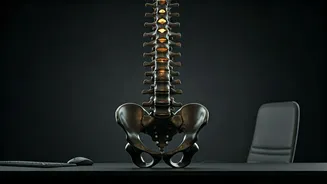
emphasize that the human spine is designed for dynamic movement, not prolonged static positions, whether that's sitting perfectly upright or slouching. Holding any single posture for extended periods, even one that seems correct, places undue and continuous stress on spinal discs and surrounding muscles. Sitting itself inherently exerts more pressure on the lower back than standing. Forcing yourself into an upright position can lead to constant tension in core muscles, paradoxically increasing spinal compression. Conversely, excessive slouching flattens the spine's natural curves, which can also heighten disc stress. The key takeaway from specialists is that there isn't a single posture that safeguards the spine; rather, the most beneficial approach involves frequent changes in position and a dynamic engagement with your seated environment. Your spine is a complex, movable structure, not a static pillar, and its well-being depends on this inherent mobility.
Ergonomic Setup Essentials
Optimizing your workspace is crucial for mitigating spinal strain during long work hours. A well-designed chair should offer adjustable height, providing lumbar support and allowing a slight recline, ideally between 100–110 degrees. This angle significantly reduces pressure on the spinal discs compared to a rigid 90-degree sitting position. Ensure your seat height is adjusted so your feet can rest flat on the floor, with your knees positioned at or slightly below hip level. Your desk should be at a height that permits your elbows to remain at a 90-degree angle with your shoulders relaxed. If the desk is too high, it forces your shoulders to elevate, leading to strain in the trapezius muscles. Too low a desk, however, can encourage slouching. For monitor placement, position the screen at eye level, approximately an arm's length away. The top of the monitor should align with or be slightly below your eye height to prevent you from adopting a forward head posture, a common cause of neck and upper back discomfort. If you primarily use a laptop, it's highly recommended to use an external keyboard and mouse to maintain proper ergonomic alignment.
Dynamic Sitting Habits
The most effective strategy for long workdays isn't about finding a single 'perfect' posture, but rather embracing a dynamic approach where the 'next posture' is always the best one. Aim for a neutral spine alignment, which involves keeping your ears directly over your shoulders, maintaining relaxed shoulders, ensuring your elbows are at a 90-degree angle, and positioning your hips slightly higher than your knees with feet flat on the floor. It's vital to avoid prolonged periods of both slouching, which involves excessive lumbar flexion, and rigid upright sitting. Distribute your weight evenly across your sit bones and utilize gentle lumbar support to preserve the spine's natural lordotic curve. Keep your head aligned vertically over your torso to minimize cervical strain. Refrain from crossing your legs for extended durations. The paramount recommendation is to vary your posture frequently throughout the day, alternating between upright sitting, a slight recline (100–110°), and even standing if your setup allows. These small, regular postural adjustments are far more effective at reducing disc pressure, alleviating muscle fatigue, and minimizing ligament strain than adhering to any single 'ideal' position.
Beneficial Micro-Breaks
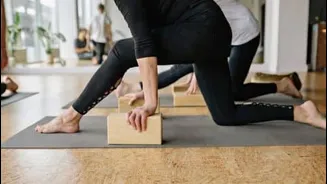
Sustained static sitting for periods exceeding 30-45 minutes significantly escalates pressure on spinal discs, leads to muscle fatigue, and impairs circulation. To counteract these effects, it's ideal to change your sitting position every 20-30 minutes. Furthermore, incorporating brief movement breaks at least once every hour is highly beneficial. Even just 1-2 minutes spent standing, walking, or performing gentle mobility exercises can substantially reduce spinal loading. Effective micro-breaks include simple yet impactful movements such as a standing back extension stretch (placing hands on hips and gently bending backward), chin tucks to counter forward head posture, shoulder rolls and scapular retractions to mobilize the upper back, seated spinal rotations for mobility, and basic hamstring and hip flexor stretches to release tension in the lower body. These short bursts of activity are critical for maintaining spinal health and overall well-being during prolonged periods of sitting.