



Planetary Spectacles Abound
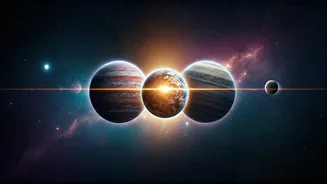
February 2026 is a prime month for planet enthusiasts, offering exceptional viewing opportunities. Jupiter, the king of planets, will dominate the evening
sky, easily visible after dark. Look out for a rare planetary alignment, a 'planet parade' where several bright planets will appear in close proximity, creating a truly memorable spectacle. Mercury, often elusive, will also be at its most visible for the year, presenting a fantastic chance to spot this speedy inner planet. Astronomers are particularly excited about the potential appearance of a bright comet, C/2026 A1 (MAPS), which could grace our early spring skies, adding another layer of wonder to the celestial show. Additionally, keep an eye out for the 'Christmas Star' phenomenon, with Jupiter shining brightly just after sunset, reminiscent of ancient celestial omens.
Moon Phases and Occultations
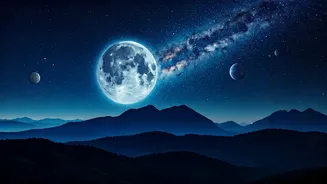
The moon will put on a diverse display throughout February 2026, transitioning through its phases and participating in intriguing celestial events. The month kicks off with a waxing crescent moon visible after dark, followed by the first quarter moon. Towards the middle of the month, stargazers can anticipate the rise of the full 'Snow Moon,' a particularly striking event, especially as it ascends with the bright star Regulus. Later, a waning gibbous moon will be visible with Regulus, and towards the end of the month, a last quarter moon will appear before dawn alongside the star Spica. Several moon occultations are also on the agenda, where the moon will appear to pass in front of stars, including Regulus and Spica, offering precise moments of cosmic drama.
Constellations and Meteor Showers
February is an excellent time to explore prominent constellations and catch a meteor shower. The mighty Orion constellation, with its recognizable belt and bright red and blue stars, will be a highlight of the winter sky. You'll also be able to spot Ursa Minor, home to Polaris, the North Star, and its famous dipper shape. Cassiopeia, often seen as a 'W' or 'M', will also be visible. For those who enjoy shooting stars, the Quadrantid meteor shower will peak in the early hours, offering a chance to witness several meteors per hour under dark skies. The 'Winter Hexagon' and 'Winter Triangles' asterisms provide excellent guides for navigating the winter constellations.
Auroras and Deep Sky Objects
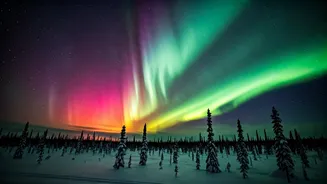
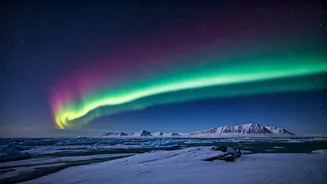
While the northern lights, or aurora borealis, are typically confined to high latitudes, the aurora forecast for February 11th suggests that tonight's activity will be limited to these regions. However, for those in prime locations, witnessing the ethereal glow of the aurora is an unforgettable experience. Beyond the visible planets and constellations, February skies offer views of the winter Milky Way, a breathtaking band of stars that stretches across the night. Take time to appreciate the vastness of space and the intricate beauty of our galaxy. The 'Hole in the Sky,' also known as the Keyhole Nebula, is another fascinating deep-sky object that may be visible to those with powerful telescopes.