


Soaking Sabudana Wisely
The foundation of great sabudana vadas lies in the initial soaking of the sago pearls. Over-soaking can transform them into a mushy mass, leading to oily,
soggy results after frying. Conversely, insufficient soaking results in pearls that remain too hard, making the vadas chewy and difficult to bind together effectively. The sweet spot is when the pearls are tender enough to be easily mashed between your fingers but still retain their distinct shape. This careful balance ensures they absorb just enough moisture to bind properly without becoming waterlogged, setting the stage for a delightful texture.
Mastering Water Drainage
Even if your sabudana is soaked to perfection, neglecting to drain away excess water can be a recipe for disaster. Any lingering moisture within the soaked pearls will essentially turn into steam during frying, causing the vadas to lose their structure and potentially disintegrate in the hot oil. It's crucial to strain the sabudana thoroughly and allow it to rest for a brief period. This resting phase helps evaporate any surface moisture, ensuring the mixture is firm enough to hold its shape and fry evenly, preventing unwelcome breakages during the cooking process.
The Perfect Potato Ratio
Potatoes are the unsung heroes that bind our sabudana vadas together. However, getting the quantity right is a delicate act. Using too much mashed potato can lead to vadas that are dense, heavy, and overly soft, lacking that satisfying crispness. On the other hand, an insufficient amount of potato binder will result in vadas that crumble and fall apart even before they hit the frying pan. The ideal mixture should feel cohesive and hold its form when gently pressed, offering a tender yet stable consistency.
Peanut Preparation Matters
Peanuts are not just for flavour; they contribute significantly to the texture and crunch of sabudana vadas. It's essential to roast them properly before adding them to the mixture. Roasting enhances their nutty aroma and crucially reduces their moisture content, which aids in achieving a crispier end product. Furthermore, the peanuts should be coarsely crushed, not finely powdered. This ensures they provide delightful textural contrast without becoming invisible or causing stress fractures in the vadas during preparation or frying.
Achieving Frying Temperature
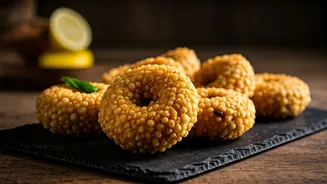
The temperature of your frying oil plays a pivotal role in determining the final crispiness and texture of your sabudana vadas. If the oil is excessively hot, the vadas will brown rapidly on the outside, appearing cooked while remaining uncooked and doughy on the inside. Conversely, if the oil isn't hot enough, the vadas will greedily absorb too much oil, turning out greasy and heavy. The ideal scenario involves moderately hot oil, which allows the vadas to cook through slowly and evenly, developing a beautifully crisp exterior and a soft, fluffy interior.
Gentle Dough Mixing
When combining the sabudana, mashed potato, peanuts, and other ingredients, overmixing can inadvertently damage the delicate sago pearls. Excessive kneading or vigorous mixing can break down the sabudana structure, leading to a sticky, pasty dough that results in a less-than-ideal texture once fried. The goal is to gently incorporate all the components until they are just combined. This ensures the sabudana pearls remain largely intact, contributing to an airy and light texture in the finished vadas.
Uniform Vada Shaping
Irregularly shaped or sized sabudana vadas can lead to uneven cooking. Smaller or thinner vadas will cook much faster than their larger, thicker counterparts. This disparity means some might become perfectly crisp while others remain undercooked or burn. To ensure consistent results, aim for uniformity. Flatten the vadas slightly to a consistent thickness and try to make them all roughly the same diameter. This consistency in size and shape guarantees that each vada cooks at the same pace, developing uniform crispness throughout.
The Crucial Resting Period
Before they venture into the hot oil, a brief resting period for the shaped sabudana vadas is a surprisingly effective step. Allowing the formed vadas to sit for a few minutes allows the ingredients to meld and firm up slightly. This seemingly small pause helps the mixture bind more securely, significantly reducing the likelihood of the vadas breaking apart during the frying process. This short period of rest contributes to a more stable structure and a better overall texture, making your efforts more rewarding.