



The Broccoli Conundrum
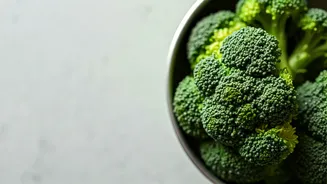
Steamed broccoli often gets a bad rap, typically associated with a limp, unappealing texture and dull color. This perception stems from a narrow margin
of error in cooking. Broccoli's transformation under steam is rapid; it brightens beautifully and softens, but can quickly degrade into a mushy, gray-green state if overcooked. The challenge lies in hitting that sweet spot where the vegetable is heated through, tender, yet retains its structural integrity and vibrant appearance. Even after the heat is turned off, residual steam continues the cooking process, a phenomenon known as carryover cooking, which can further compromise the desired texture and color. To demystify this common kitchen challenge, extensive tests were conducted to pinpoint the ideal steaming duration and handling methods, ensuring consistently delicious results that showcase broccoli's true potential.
Timing is Everything
To precisely determine the optimal cooking window, a series of controlled steaming experiments were performed. Broccoli florets of uniform size were introduced to actively steaming water and removed at various intervals: 1, 2, 5, 10, and 20 minutes. Immediate evaluation focused on color, texture, aroma, and taste. The findings indicated a clear progression: at 1 minute, the broccoli was brighter but still firm; at 2 minutes, some softening occurred, but the core remained raw-tasting. The true peak was observed at 5 minutes, where florets exhibited a bright green hue, were tender yet firm, and evenly cooked throughout, offering a clean, faintly sweet flavor. Beyond this point, deterioration was evident. At 10 minutes, the color dulled to an olive tone, and the texture softened significantly. By 20 minutes, the broccoli had completely collapsed, presenting a gray-green appearance and a bland, watery taste, highlighting the critical importance of the 5-minute mark as a benchmark for perfection.
The Aftermath of Heat
Understanding carryover cooking is crucial for perfecting steamed broccoli. Following the 5-minute benchmark, a separate test examined the impact of residual steam. Broccoli held in a covered steamer after the heat was removed showed noticeable changes. After an additional 5 minutes off the heat, the florets softened considerably, losing their tender-crisp snap and beginning to drift towards an olive hue. Extending this residual cooking period to 15 minutes resulted in broccoli that was nearly indistinguishable from the 10-minute batch in the initial test – limp, dull, and waterlogged. This demonstrates that steam is a potent cooking medium, its latent heat efficiently continuing the cooking process. Therefore, prompt removal from the steamer is essential to halt this effect and preserve the broccoli's ideal state, even if the heat source has been extinguished.
The Ice Bath Advantage
The practice of shocking vegetables in an ice bath immediately after cooking is remarkably effective in halting the cooking process. When broccoli was transferred directly from the steamer to a bath of ice water, the residual heat was rapidly neutralized. This resulted in vividly maintained color and a firmly tender-crisp texture that held up even after resting. In contrast, broccoli that was simply removed from the steamer and left to sit continued to soften slightly due to trapped internal heat. The ice bath works by quickly lowering the vegetable's temperature, preventing the enzymatic breakdown of pectin—the cellular 'glue'—which is responsible for softening and eventual mushiness. This technique is especially beneficial if you are preparing broccoli in advance, plan to reheat it, or desire maximum visual appeal for dishes like salads or composed plates.
Decoding Broccoli's Science
The visual and textural changes in broccoli during steaming are rooted in scientific principles. Initially, heat causes air pockets within the florets to expand and release, making chlorophyll more prominent and thus intensifying the green color. However, prolonged exposure to heat and acidity causes chlorophyll to transform into pheophytins, which exhibit a duller, olive-green appearance. Regarding texture, raw broccoli's rigidity comes from strong cell walls and turgor pressure. As it heats, pectin, the substance binding plant cells together, begins to soften. Optimal tenderness is achieved when pectin softens sufficiently without causing cell walls to break down. Beyond this point, continued heat degrades pectin further, leading to cell separation, water loss, and the characteristic mushy texture. Flavor changes are also significant; while steaming minimizes flavor leaching compared to boiling, prolonged heating degrades delicate aromatic compounds and can promote the development of off-putting sulfurous notes.
The Optimal Steaming Method
Achieving perfectly steamed broccoli consistently relies on a precise, yet simple, methodology. Begin by bringing 1 to 2 inches of water to a vigorous boil in a pot equipped with a steamer basket. Ensure broccoli florets are of uniform size and arrange them in a single layer within the basket. Cover the pot immediately to trap the steam. The steaming duration typically ranges from 4 to 6 minutes, though smaller florets may be ready closer to the 3-minute mark. Test for doneness by attempting to pierce the thickest part of a stem with a knife; it should offer slight resistance but slide in easily, while the floret remains vibrantly green. This usually takes around 5 minutes. Upon reaching the desired tenderness, remove the broccoli promptly from the steamer. For immediate serving, spread it on a tray to release any lingering steam. If preparing ahead or aiming for maximum color retention, a brief immersion in an ice bath is recommended.