




A Game of Skill
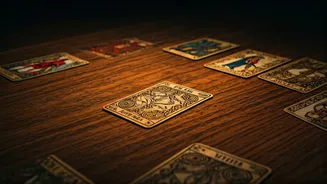
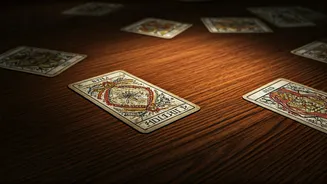
Contrary to popular belief, tarot cards emerged in 15th-century Italy not for occult purposes, but as components of a sophisticated card game known as 'tarocchi.'
This popular pastime was primarily enjoyed by the affluent aristocracy, akin to modern games like Bridge, offering intellectual stimulation and social engagement. These early decks, far from being mystical artifacts, were crafted as exquisite works of art. Often hand-painted and richly adorned, they were commissioned by wealthy families, making them highly prized luxury items. The focus was entirely on the gameplay, the strategic maneuvering of cards, and the enjoyment of the game itself. The association with fortune-telling and deeper symbolic meanings would not emerge for many centuries, a testament to how cultural interpretations can profoundly reshape the perception of an object over time.
The Mystical Shift
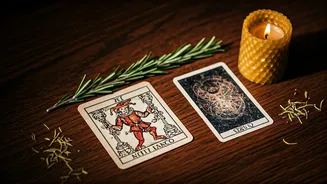
The transformation of tarot from a simple card game into a tool for divination and spiritual exploration was a gradual process that took place much later in history. It wasn't until the 18th century that French writers and occultists began to imbue the cards with ancient wisdom and hidden meanings. This reinterpretation paved the way for tarot's association with mysticism. Interestingly, some early proponents of tarot's mystical side concocted tales of Egyptian origins, attempting to lend greater credibility and mystique to the practice. However, historical evidence points to the game's Italian roots, not an ancient Egyptian legacy. The idea of tarot as a means to predict the future, a concept now deeply ingrained in its popular image, only developed centuries after its inception, highlighting a significant evolution in its cultural role.
Evolution of Use
Over the centuries, tarot has demonstrated a remarkable capacity for reinvention, adapting to the prevailing cultural currents and evolving societal interests. From its initial conception as a form of aristocratic entertainment in Italy, it transitioned through a period where it was embraced by occult circles, particularly in 18th-century France. This era saw the cards imbued with esoteric symbolism and used for divination. In contemporary times, tarot has found a new role as a powerful instrument for introspection and self-discovery. Many individuals now utilize the cards not to predict a fixed future, but as a means to explore their inner world, gain clarity on personal challenges, and foster a deeper understanding of themselves and their life paths. This ongoing adaptation showcases tarot's enduring relevance and its ability to resonate with different needs across various historical periods.