






A New Era in Space
Starcloud, a pioneering space technology firm, has officially achieved 'unicorn' status with a substantial $170 million Series A funding round. This significant
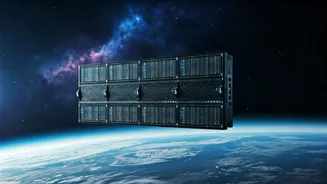
financial infusion propels the company's valuation to an impressive $1.1 billion, marking a rapid ascent just 17 months after their participation in the Y Combinator accelerator program. The company's core mission is to deploy an expansive network of 88,000 orbital data centers, a venture poised to dramatically influence the future of artificial intelligence computing. With this latest investment, Starcloud's total capital raised since its inception in 2024 now stands at approximately $200 million, underscoring the immense investor confidence in their groundbreaking vision for data processing in low Earth orbit.
Scaling Up Spacecraft
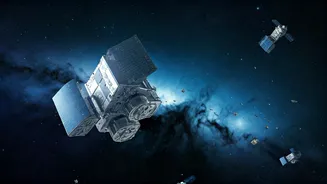
The newly acquired funds are earmarked for the accelerated development and production of Starcloud-3, a next-generation spacecraft designed for orbital data center operations. This advanced satellite represents a considerable leap in scale and capability compared to its predecessors; Starcloud-1, launched in November, weighed 60 kilograms, and the forthcoming Starcloud-2, slated for launch later this year, will tip the scales at 450 kilograms. Starcloud-3, however, is a significantly larger three-ton vehicle. To accommodate this ambitious expansion, the company is establishing a new 3,000-square-meter manufacturing facility in Woodinville, Washington. This in-house production approach is deemed essential by CEO Philip Johnston due to the "brutal" cost dynamics involved in creating these specialized spacecraft.
Stripped-Down Design
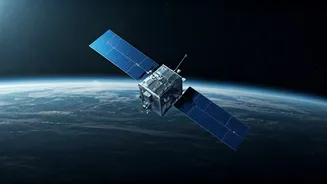
The Starcloud-3 spacecraft boasts a deliberately simple and cost-effective design, optimizing it for high-volume manufacturing. CEO Philip Johnston described its core components as "solar panels, radiators, chips and two optical terminals," highlighting a lean architecture for low Earth orbit operations. This setup relies heavily on intersatellite data links and integrates with existing third-party broadband systems to facilitate rapid data exchange. This minimalist approach ensures that production can scale efficiently, aligning with the company's aggressive deployment plans for its orbital data center network.
Starship Integration
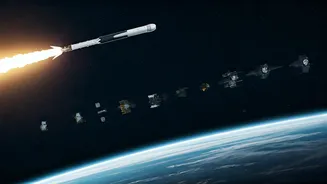
Starcloud is strategically aligning its deployment timeline with the development of SpaceX's heavy-lift Starship vehicle. The company plans to utilize Starship launches to place its Starcloud-3 satellites into orbit. Projections indicate that a single Starship launch could accommodate approximately 50 Starcloud-3 satellites, translating to an impressive 10 megawatts of computing capacity per launch. The long-term strategy involves launching hundreds of satellites monthly, adding tens of gigawatts of capacity annually as Starship's operational cadence increases. Starcloud anticipates commencing Starship deployments around the mid- to late-2028 timeframe, following the anticipated readiness of Starship for larger commercial payloads after early next year.
Infrastructure Provider
In the burgeoning field of orbital data centers, Starcloud differentiates itself by acting as an infrastructure provider rather than directly operating AI workloads. Customers will have the flexibility to install their own computing hardware and services, mirroring the model of leasing capacity in terrestrial data centers. This approach is exemplified by Starcloud-1's successful demonstration of an Nvidia H100 processor operating in orbit for AI tasks. Furthermore, Starcloud-2 is set to host commercial cloud workloads for early clients like Crusoe, an AI infrastructure provider, alongside collaborations with tech giants such as Nvidia, AWS, and Google. Starcloud-2 will generate approximately 8 kilowatts of power, a significant increase from Starcloud-1, and will feature the largest commercial deployable radiator ever sent to space.
Financial Backing
The company's successful Series A funding round was spearheaded by prominent venture capital firm Benchmark and EQT Ventures, a private equity firm managing over $100 billion in assets, including a portfolio of more than 70 data centers. A robust group of additional investors participated, including Macquarie Capital, NFX, Nebular, Adjacent, 776 Ventures, Fuse Ventures, Manhattan West, and Monolith Power Systems, alongside Y Combinator. Notable angel investors also joined the round, such as former Boeing CEO Dennis Muilenburg, former Starbucks CEO Kevin Johnson, and retired U.S. Air Force General Stephen Wilson. As part of this investment, Chetan Puttagunta, a partner at Benchmark, will be joining Starcloud's board of directors.