


Seal In The Heat
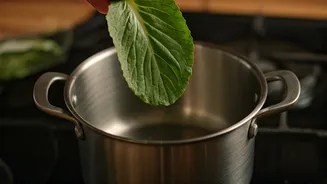
A fundamental yet often overlooked practice is to always cook with a lid securely placed on your utensils. This simple act traps essential heat and steam,
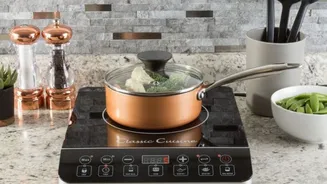
creating a more efficient cooking environment. When a pot or pan is covered, food cooks more rapidly and evenly, meaning your stove doesn't need to remain on for extended periods. Escaping heat forces the burner to work harder, thus consuming more LPG. By consistently covering your cookware, you can achieve substantial savings in both time and precious cooking gas.
Match Burner To Pot
Many gas stoves feature burners of varying sizes, but it's common for individuals to default to using the largest one for most tasks. This habit leads to considerable gas wastage, as a large flame spreading beyond the base of a small utensil is highly inefficient. It's crucial to utilize the appropriate burner for the cookware size; opt for the smaller burners when using small pots and reserve the larger ones for bigger vessels or when preparing larger quantities of food. This mindful selection ensures that the heat is directed effectively where it's needed, optimizing gas usage.
Pre-Soak For Speed
Significantly reducing cooking gas expenditure can be achieved by pre-soaking staples like rice, lentils, and beans. When these ingredients are given time to absorb water before hitting the heat, they soften considerably. This preparatory step drastically cuts down the time required for them to cook on the stove. Even a brief soaking period of 30 minutes to an hour can lead to noticeable reductions in cooking duration, translating into both time and LPG savings.
Chop Small, Cook Fast
The size at which you cut your vegetables can directly impact the amount of gas you consume. Large, dense pieces of produce require a longer duration on the flame to become tender. By opting to cut vegetables into smaller, uniform pieces, you facilitate quicker and more consistent cooking. This allows them to soften and cook thoroughly in a reduced timeframe, thereby minimizing the gas needed for your meal preparation.
Batch Cook Strategically
Instead of repeatedly lighting the stove throughout the day for individual dishes, consider a more efficient approach: batch cooking. Planning your meals to prepare multiple dishes in a single cooking session can lead to substantial gas savings. For instance, you can simultaneously cook vegetables, rice, and a lentil dish, rather than turning on the burner multiple times. This consolidated approach minimizes burner ignition and sustained heat usage.
Simmer, Don't Blast
A common error in cooking is maintaining a high flame even after liquids have reached a boil. Once your water or curry begins to bubble vigorously, the cooking process can continue effectively at a lower, simmering temperature. Keeping the flame unnecessarily high at this stage is a direct waste of LPG without any significant benefit to the cooking speed. Adjusting the flame to a gentle simmer conserves gas while allowing the food to cook through.
Maintain Clean Burners
The efficiency of your gas stove is directly influenced by the cleanliness of its burners. Over time, food particles and grease can accumulate and clog the small holes in the burner heads. This obstruction leads to uneven flames and inefficient combustion of the LPG, meaning you're using more gas for less heat. Regularly cleaning your burners ensures a consistent, strong blue flame and optimal gas utilization.
Pot-Flame Harmony
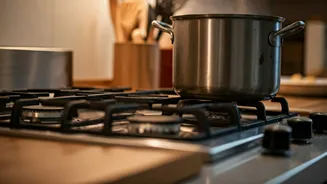
Another frequently observed cooking inefficiency involves using cookware that is disproportionately small for the flame size. When the flame flares up beyond the base of the pot, a significant amount of heat is lost into the surrounding air, doing no work on the food. To maximize heat transfer and minimize waste, it’s essential to select utensils whose bases are appropriately sized to match the burner's flame. This ensures the heat is concentrated effectively on the food.
Flat Bottom Advantage
The shape of your cookware plays a role in how quickly and efficiently food cooks. Vessels with flat bottoms are generally more effective at absorbing and distributing heat from the burner compared to those with rounded bases. A flat bottom ensures even contact with the stove, allowing heat to spread uniformly across the entire base. This superior heat transfer accelerates the cooking process, thereby reducing the overall LPG consumption.
Residual Heat Cooking
A clever technique to save gas involves utilizing the residual heat of your cookware. Many dishes continue to cook even after the flame has been extinguished, thanks to the retained heat within the pot. By turning off the gas a minute or two before your dish is fully prepared, you can allow the residual heat to complete the cooking process. This simple adjustment can lead to noticeable savings in LPG over time without compromising the final result.