




Professional Diagnosis Is Key
While you can certainly play detective at home, the definitive answer to your hair loss concerns lies with a medical professional. Dermatologists or trichologists
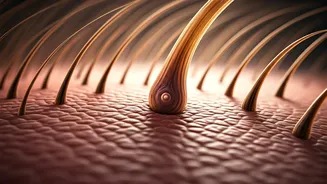
possess specialized tools and expertise to accurately diagnose the cause. They might employ trichoscopy to meticulously examine your scalp for signs of miniaturization, a clear indicator of genetic hair loss. Furthermore, they can conduct a 'pull test' to gauge how readily your hair detaches and may order essential blood work. This includes testing thyroid function, iron levels, and vitamin D to identify and rule out any underlying nutritional deficiencies or hormonal imbalances that could be contributing factors.
Pattern of Hair Loss
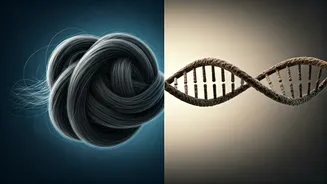
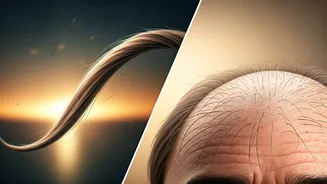
Observing the specific location of hair thinning can offer significant clues. Genetic hair loss, scientifically known as androgenetic alopecia, follows predictable patterns. For men, this typically manifests as a receding hairline at the temples, forming an 'M' shape, and thinning at the crown. In contrast, women with genetic hair loss usually retain their frontal hairline but experience generalized thinning across the scalp, often noticing a widening of their natural part. If your hair loss doesn't conform to these genetic templates and appears random, it could indicate a different issue. Diffuse thinning, where hair loss is uniform across the entire scalp, or the appearance of distinct, coin-sized bald patches (a hallmark of alopecia areata), suggests non-genetic causes.
Speed of Hair Fall
The rate at which you're losing hair is a critical differentiator. Genetic hair loss, driven by a hereditary sensitivity to DHT (dihydrotestosterone), is a gradual process. This hormone slowly shrinks hair follicles over an extended period, often years or even decades, before the thinning becomes truly apparent. It's a stealthy decline. Conversely, non-genetic hair loss is often characterized by a sudden, dramatic shedding. If you're suddenly finding large clumps of hair in your shower drain or on your brush after minimal activity, genetics are likely not the primary culprit. This rapid loss is frequently a reactive response from your body to a significant systemic shock or stressor.
Examining the Strands
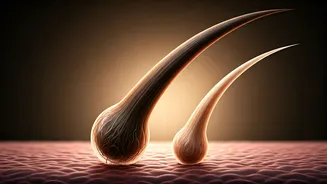
A close inspection of the hair strands themselves can reveal valuable information. In cases of genetic hair loss, the individual hairs undergo a process called 'miniaturization.' As the hair follicles shrink, the resulting strands become progressively finer, shorter, and weaker before eventually ceasing to grow altogether. In contrast, non-genetic hair loss typically involves the shedding of hairs that are still full-length and of normal thickness. These hairs are essentially falling out prematurely due to an external trigger, rather than being inherently weakened from the root.
Recent Life Events
Consider significant events that occurred in your life approximately two to three months prior to noticing increased hair loss. Major emotional or physical stressors, such as periods of intense anxiety, severe illness, surgical procedures, childbirth, or drastic dieting, can trigger non-genetic hair fall. This type of shedding usually manifests a few months after such an event. Furthermore, pay attention to other accompanying symptoms. While a healthy, normal-looking scalp might point towards genetics, symptoms like burning, itching, or flaking of the scalp, or the loss of eyelashes and eyebrows, strongly suggest an underlying non-genetic health issue that requires medical attention.