






Dual Chip Production
Elon Musk has revealed an ambitious venture in Austin, Texas, focused on establishing two cutting-edge chip manufacturing plants, collectively referred
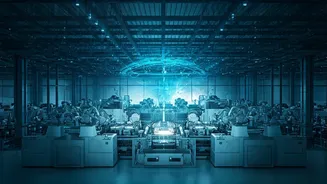
to as 'Terafab'. One facility is slated to develop chips essential for powering Tesla's autonomous vehicle technology and its burgeoning line of Optimus humanoid robots. The second, equally crucial factory will be dedicated to producing advanced semiconductors designed for artificial intelligence data centers intended for deployment in space. This strategic move signifies a monumental leap in self-sufficiency for Musk's enterprises, aiming to meet an ever-growing demand for specialized processing power that current global chip suppliers may struggle to fulfill adequately in the future. The announcement details that each of the two 'fabs' within the Terafab complex will concentrate on manufacturing a single, distinct chip design, emphasizing specialization and efficiency in production.
Meeting Future Demands
Musk articulated the critical necessity of constructing the Terafab facilities, stating that without them, his companies would face a significant shortfall in the chips required for their future endeavors. He emphasized that the projected chip requirements for his ventures are poised to significantly exceed the current total global chip production capacity. This proactive approach aims to preempt potential supply chain bottlenecks and ensure the uninterrupted development and scaling of Tesla's automotive and robotics divisions, as well as SpaceX's ambitious plans for space-based AI infrastructure. The commitment to building these advanced factories underscores a long-term vision for technological independence and innovation, positioning his companies to lead in sectors reliant on high-performance computing.
Space-Grade AI Chips
A particularly intriguing aspect of the Terafab project is the development of chips specifically engineered for AI data centers in space. Musk highlighted the unique challenges of operating in the harsh environment of space, noting the need for chips that can withstand extreme conditions. These space-grade processors will be designed to function reliably at higher temperatures and under other demanding circumstances, ensuring the stability and effectiveness of AI operations far beyond Earth's atmosphere. This specialized chip production is vital for supporting initiatives related to galactic civilization, enabling advanced computational capabilities for satellites and other extraterrestrial applications. This focus on space-hardened technology demonstrates a forward-thinking strategy to leverage AI for exploration and expansion in the cosmos.
Unprecedented Scale
The Terafab project is positioned to become one of the largest chip manufacturing facilities ever conceived, with an astonishing target output of one terawatt of computing capacity per year. This figure is noteworthy when compared to the approximately half a terawatt currently generated across the entire United States. This immense production capability will integrate logic, memory, and advanced packaging processes under a single operational roof, streamlining the manufacturing of complex semiconductors. The sheer scale of the Terafab signifies a revolutionary approach to chip production, aiming to satisfy the insatiable demand for computational power driven by advancements in artificial intelligence, electric vehicles, and space exploration. The endeavor also includes harnessing solar power to fuel these operations, emphasizing a commitment to sustainable energy for massive technological undertakings.