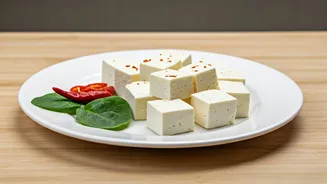

Paneer's Nutritional Powerhouse
Paneer is a great source of protein, essential for building and repairing tissues in the body. It also contains calcium, crucial for bone health, keeping
your bones strong and healthy. Moreover, paneer contains phosphorus, which works alongside calcium. This combination supports overall bone health. Paneer is also a good source of vitamins and minerals. These nutrients are essential for many bodily functions, including boosting your immune system. Including paneer in your diet means you are providing your body with a range of vital nutrients that contribute to overall health and well-being. Additionally, paneer often contains beneficial fats that support the absorption of fat-soluble vitamins, contributing to a better nutrient uptake. Paneer offers a nutritious base for building a balanced diet, which is an important key to a healthy lifestyle and is a key ingredient in many Indian dishes.
Protein for Growth & Repair
As a rich source of protein, paneer is a building block for tissues and muscles. Protein plays a crucial role in cell repair and growth. It's especially beneficial for children, adolescents, and athletes who have a high need for protein. Protein keeps you full for longer, making paneer a useful food choice to manage weight. It helps control cravings and stops you from overeating. Regular paneer consumption supports a healthy metabolism. Because paneer assists in enzyme and hormone production, it influences various body processes. By providing your body with a good supply of protein, paneer strengthens your body, aids recovery, and promotes a generally healthier life. Whether you're a fitness enthusiast or simply aiming for a healthier diet, paneer can be a great addition to your meal.
Bone Health Benefits
Paneer stands out as an excellent source of calcium. Calcium is essential for strong bones and teeth, which protects against fractures and diseases like osteoporosis. Phosphorus, another mineral found in paneer, boosts the positive impacts of calcium, enhancing bone density and structure. Regular intake of paneer helps to maintain healthy bones and teeth. This is particularly important as people get older, when bone health becomes an even greater concern. Consuming paneer can assist in delaying age-related bone loss. It also helps to prevent conditions such as bone thinning. Paneer can support a strong and resilient skeletal system, contributing to overall health and well-being, by offering key minerals.
Versatile Culinary Delight
Paneer's versatility in the kitchen makes it a favorite. From curries and kebabs to salads and snacks, paneer adapts to various cooking styles. Its mild flavor lets you experiment with spices, herbs, and other ingredients, making it easy to create flavorful meals. Paneer is perfect for vegetarian and non-vegetarian dishes alike. It provides a satisfying texture and rich taste. Whether you're whipping up a quick weeknight dinner or preparing a feast, paneer can be the star. Adding paneer to your recipes not only enhances the taste but also boosts the nutritional value of your meals. This versatility makes paneer an accessible and delightful way to enjoy a balanced diet. Its adaptability means there’s always a new paneer dish to try.
Paneer vs. Chole Comparison
While paneer is packed with protein, so are chickpeas (chole). Both are nutritious choices, but they differ in their profiles. Paneer offers a concentrated dose of protein and essential nutrients, perfect for building and repairing body tissues. Chole brings a plant-based protein alternative. It comes with dietary fiber, which aids digestion. Chole is also rich in iron, offering additional benefits. Choosing between them depends on dietary needs and preferences. Paneer is a good choice for those wanting a dairy-based protein. For those looking for fiber and iron, chole provides a plant-based option. Both are healthy options that can be included in a diet. These choices can meet different nutritional needs. Both paneer and chole fit into a balanced diet.