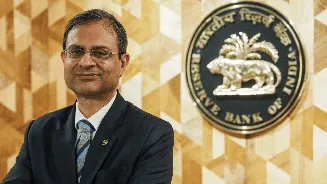









RBI Policy & Market Impact
The Reserve Bank of India's recent monetary policy decisions have played a significant role in shaping market sentiment and the nation's financial trajectory.
While holding key interest rates steady, the RBI's stance, particularly concerning inflation targets and potential future adjustments, has been closely watched. Experts suggest that the persistence of inflation, especially influenced by global oil price fluctuations, could necessitate one to two rate hikes in the future. This cautious approach aims to maintain price stability while supporting economic growth. The central bank's firm commitment to its 4% inflation target is a cornerstone of its policy, with future rate actions contingent on the sustained presence of inflationary pressures. Concurrently, the Indian Rupee has shown resilience, supported by policy interventions and robust foreign exchange reserves, which stand at a healthy $682 billion, providing an estimated 11 months of import cover. This stability is crucial for managing external economic shocks and fostering investor confidence, underscoring the RBI's strategic management of the nation's monetary ecosystem.
Economic Growth & Investment
India's economy continues to demonstrate remarkable resilience, projecting a growth path of around 7% by FY28, as indicated by the Chief Economic Advisor. The nation recently celebrated a robust 7.7% GDP growth, a testament to its strong economic fundamentals. This positive outlook is further bolstered by strategic policy initiatives aimed at attracting investment and enhancing manufacturing capabilities. For instance, the government is actively rolling out 100 ethanol fuel stations across the country, promoting cleaner energy alternatives and reducing import dependency. Additionally, the adoption of AI for SMART standards is streamlining compliance processes, making the business environment more efficient. Foreign investment continues to flow into the country, with FDI inflows rising by 18% to $58.84 billion in FY26, with a notable increase from the US. To further boost this, India has waived capital gains tax on foreign government bonds and G-secs, a move designed to attract more foreign capital and strengthen the Rupee.
Sectoral Developments & Innovations
Across various sectors, India is witnessing significant growth and innovation. The renewable energy sector is expanding rapidly, with initiatives like the rooftop solar scheme aiming to reach 75 lakh installations and ongoing investments in green hydrogen. Companies like Inox Clean are acquiring substantial renewable energy portfolios, signaling strong investor confidence. In the automotive space, a focus on flex-fuel vehicles (E85) is underway to reduce the nation's energy import bill. Manufacturing is also getting a boost, with plans to invest Rs 18,600 crore in Tamil Nadu, creating substantial employment. Furthermore, the country is enhancing its digital infrastructure, with AI being deployed across sectors to improve efficiency and service delivery. The e-commerce market continues its surge, driven by platforms reaching millions of users weekly. Innovations in logistics and the automotive sector, including new product development centers and EV charging networks, are further shaping the economic landscape.
Financial Services & Corporate News
The financial services sector in India is characterized by both growth and evolving regulatory landscapes. Microfinance institutions are anticipating a rise in Non-Performing Assets (NPAs) by FY27, according to a CareEdge report, highlighting potential challenges in this segment. In the corporate world, significant appointments and strategic moves are being made. bigbasket has appointed a new Chief Operating Officer, while Imarticus Learning has brought on a new Chief Growth Officer. The investment banking and capital markets are active, with several companies filing for IPOs, including Paras Healthcare. Joint ventures are forming to tap into new markets, such as a railcar leasing JV and a collaboration targeting the aerospace and defence sector. Regulatory bodies like SEBI are actively overseeing market operations, as evidenced by probes into financial irregularities and actions taken against promoters for misrepresentation, ensuring market integrity and investor protection.