






Light's Wavelength Magic
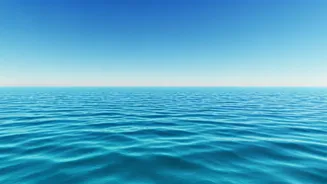
The captivating turquoise color of ocean water is not merely an indicator of its pristine condition, but rather a result of how light interacts with water molecules.
When sunlight, a composite of various colors, enters the water, each color's unique wavelength behaves differently. Longer wavelengths, like red and yellow, are absorbed by the water relatively quickly. In contrast, colors with shorter wavelengths, such as blue and violet, penetrate deeper and are more prone to scattering. This scattering effect, where light bounces off particles suspended in the water, is what makes the water appear blue to our eyes. The deeper and more the blue light is scattered, the more intense the perceived blue color becomes. While most of the ocean is too deep for light to penetrate significantly, certain locations exhibit this vibrant blue due to specific conditions that allow for this light phenomenon to be prominent.
Shallow Depths and Purity
The enchanting azure and turquoise shades so often associated with tropical paradises are typically found in areas where the water is notably shallow. In these regions, light can reach the seabed and reflect back, enhancing the perceived color. Crucially, these idyllic waters are almost entirely free from plankton. Plankton, microscopic organisms abundant in many marine environments, tend to absorb blue light and reflect green light, giving the water a more greenish or murky appearance. The absence of significant plankton allows the inherent blue of the water, amplified by light scattering, to dominate. Furthermore, the seabed in these locations often consists of lighter-colored sand and sediment. Unlike muddy or silty bottoms that easily churn up and cloud the water, these lighter sediments remain settled, contributing to the exceptional clarity that allows the water's natural turquoise color to shine through vividly.
Calm Seas, Vibrant Hues
Another significant factor contributing to the mesmerizing turquoise of certain ocean waters is their remarkable calmness, largely due to a lack of strong 'upwelling.' Upwelling occurs when winds push surface water away from the coast, prompting deeper, often nutrient-rich water to rise and replace it. While this nutrient-rich water supports marine life, it also tends to carry a higher biological load, which can increase murkiness and detract from the vibrant blue. Destinations renowned for their turquoise waters typically experience less wind and fewer disruptive currents, resulting in exceptionally still and placid seas. This tranquility minimizes the disturbance of sediments and prevents the upwelling of denser, potentially less clear, water. The consistent stillness allows for unparalleled clarity, permitting the pure blue light scattering to dominate and create that sought-after, dreamy turquoise spectacle.