





Early Clerical Origins
The story of the shirt collar begins not in high fashion, but in the somber world of 15th-century clergy. Back then, these garments were primarily designed
to shield the neck from the abrasive friction of stiff, religious vestments. This functional inception laid the groundwork for what would become a significant sartorial element, proving that even the most basic clothing features can have humble yet impactful beginnings, ultimately leading to their widespread adoption and subsequent transformation.
Renaissance Status Symbols
As centuries turned, the collar shed its purely functional skin and ascended to become a potent emblem of wealth and social standing during the Renaissance. Aristocracy adorned themselves with elaborate, often starched, ruffs that extended dramatically from the neckline. These weren't just accessories; they were visual declarations of one's privileged position in society, a far cry from their modest beginnings. This period marked a pivotal shift, transforming the collar from a simple protective band into a canvas for ostentatious display and a cornerstone of aristocratic fashion.
Adding Structure and Form
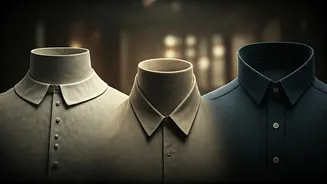
Beyond mere adornment, collars play a crucial role in garment construction and aesthetics by providing structure and definition to shirts. They act as a frame for the wearer's face, lending a more polished and finished appearance. This structural element is particularly vital for formal wear, where a well-defined collar contributes significantly to the overall silhouette and the impression of neatness and professionalism. Without this supporting element, many shirts would lack the desired shape and formality.
Protection from Elements
Historically, collars also served a vital protective purpose, shielding the neck from the harshness of the elements and the coarseness of outer garments. In colder climes, they offered an initial layer of defense against chilly winds, while also acting as a buffer against the rougher textures of tunics or cloaks worn over shirts. This dual function highlights how clothing features often adapt to meet both practical and environmental needs, evolving in tandem with human necessity and comfort.
The Rise of Detachable Collars
The 19th century brought about an ingenious innovation that significantly eased the burden of laundry: detachable collars. Instead of washing an entire shirt, individuals could simply remove and clean the collar, a far more manageable task. This practical advancement not only saved time and effort but also allowed for the reuse of shirt bodies while maintaining a crisp, clean neckline, demonstrating a clever solution to the challenges of maintaining formal attire in an era before modern washing machines.
Enduring Symbol of Formality
Even in contemporary fashion, the presence of a collar on a shirt continues to evoke a sense of professionalism and formality. While collarless styles have gained traction in casual settings, the collared shirt remains a standard for business attire, formal events, and any occasion where a more polished look is desired. This enduring association underscores the collar's deep-rooted cultural significance as a marker of respectability and convention in dress.