








A New Trade Dawn
The announcement of an interim trade agreement between the United States and India marked a pivotal moment in their economic relationship. This development
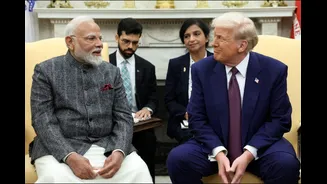
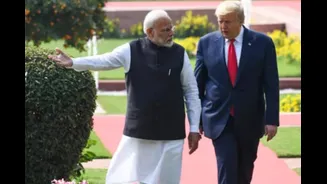
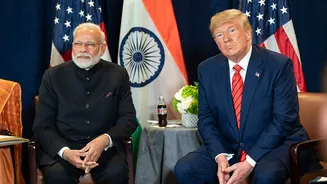
saw the US officially confirm a reduction in tariffs on various Indian goods, with duties dropping from 25% to 18%. Prime Minister Narendra Modi’s corroboration of this news was met with a spectrum of reactions, highlighting the significance of this shift. Following this, a joint statement by the US and India formally unveiled an Interim Agreement, serving as a foundational framework. This framework is intended to pave the way for more extensive negotiations on a broader US-India Bilateral Trade Agreement (BTA), a process that was initiated by President Trump and PM Modi on February 13th of the previous year. The breakthrough occurred after months of diligent negotiations, culminating in a crucial phone call between President Trump and PM Modi just before the official announcement on February 2nd. The market responded positively to this news, recognizing the US as a primary trade partner for India. However, some apprehension, particularly within the farming community, surfaced, shifting from initial critiques of the deal itself to concerns about potentially compromising domestic interests, despite the final accord still being under development.
Key Terms Unveiled
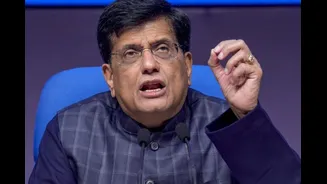
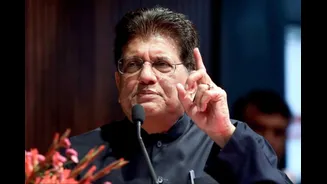
The core components of this interim US-India agreement reveal a strategic approach to tariff adjustments. India committed to reducing or eliminating duties on a diverse array of US industrial goods, alongside a broad range of American food and agricultural products. Specific items mentioned include dried distillers' grains (DDGs), red sorghum intended for animal feed, various tree nuts, both fresh and processed fruits, soybean oil, and wine and spirits, among other products. Notably, many of these commodities were already subjects of trade between the two nations and were anticipated to be part of such an agreement. Indian Commerce Minister Piyush Goyal has consistently reassured that India's sensitive sectors in food and agriculture have been adequately protected. The government has positioned this deal as a significant advantage for Micro, Small, and Medium Enterprises (MSMEs), entrepreneurs, skilled professionals, and for fostering access to advanced technologies. The agreement is characterized as an 'interim' arrangement, implying that numerous details still require further refinement. Negotiators are now tasked with converting these headline commitments into legally binding tariff schedules, meticulously defining product lists eligible for preferential treatment, and establishing mechanisms for dispute resolution. The reciprocal reduction in tariffs is expected to lower the final cost of Indian goods in the US market. This is particularly advantageous for labor-intensive industries such as textiles, apparel, footwear, and specific engineering goods, potentially enabling exporters in these categories to reclaim market share lost to competitors benefiting from lower US duties. Reports indicate a strong expectation that these sectors will see a resurgence in competitiveness.
Broadening Benefits & Concerns
Beyond the immediate tariff reductions, the framework explicitly highlights opportunities for small and medium-sized enterprises. By lowering tariffs and clarifying rules of origin, smaller suppliers can more easily connect with US buyers and integrate into global value chains. Industries such as gems and jewellery, chemicals, rubber, home decor, and seafood, particularly shrimp, are also anticipated to benefit significantly, as reduced tariffs can alleviate margin pressures and streamline inventory management. Conversely, certain domestic industries that compete with imports, including some capital goods, ICT hardware, and medical devices, might face intensified competition from US suppliers if India chooses to lower protective tariffs in these areas. The agreement is also framed within a broader geopolitical context. The deepening of economic ties with the US is seen as a catalyst for unlocking crucial technology transfers, attracting investments in data centers and semiconductors, and enhancing cooperation on supply-chain resilience—all critical priorities within India's industrial strategy. While the agreement's overall aim is to foster a more balanced and mutually beneficial trade relationship, the specific impact on import-competing domestic sectors will require careful monitoring and strategic adaptation.