



Bharti's Traditional Choice
Comedian and host Bharti Singh recently shared a personal kitchen philosophy during a conversation with Rajeev Khandelwal. She revealed a deliberate decision
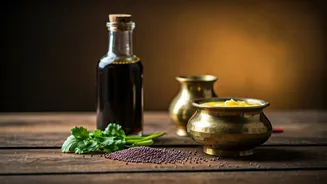
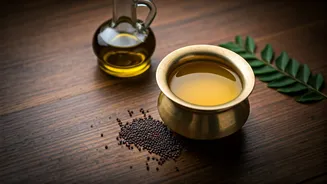
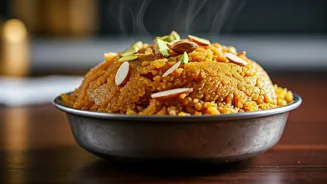
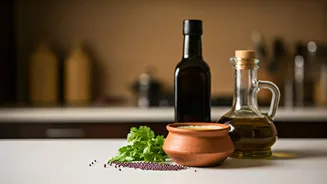
to steer clear of refined oils and what she terms 'meetha tel' (sweet oil), opting exclusively for two time-honored cooking fats: desi ghee and sarson ka tel, commonly known as mustard oil. Bharti emphasized that even today, these two ingredients are the sole occupants of her pantry for cooking. She elaborated, stating that some days her curries are prepared using the richness of desi ghee, while on other occasions, mustard oil takes the forefront. This commitment to traditional cooking mediums reflects a conscious effort to embrace age-old culinary practices over modern, processed alternatives. Her stance, shared on her YouTube podcast, highlights a growing awareness and preference for natural ingredients in everyday cooking, moving away from the widely used, but potentially less wholesome, refined oils.
Expert Insights on Ghee & Mustard Oil
Following Bharti Singh's revelation, a consultant dietitian, Garima Goyal, weighed in on the practice of exclusively using desi ghee and mustard oil. Goyal acknowledged that this dietary shift is becoming increasingly popular and stressed the importance of understanding it practically rather than adopting it blindly. She confirmed that both ghee and mustard oil are indeed traditional fats with distinct advantages. Mustard oil is noted for its beneficial fats, including monounsaturated fatty acids (MUFA) and omega-3s, and possesses anti-inflammatory properties. Desi ghee, on the other hand, is a good source of fat-soluble vitamins such as A, D, E, and K, and can contribute to improved gut health when consumed in appropriate amounts. Goyal’s perspective indicates that while these fats are traditionally valued, their health impact is nuanced and dependent on various other dietary factors.
Mindful Usage is Key
While the switch to traditional fats like ghee and mustard oil is a positive step, dietitian Garima Goyal cautioned against assuming it automatically equates to a healthier diet. The crucial elements, she explained, are not just the type of fat used but also the quantity consumed, the overall balance of one's diet, and the cooking methods employed. Even beneficial fats, when used excessively, can lead to an increased calorie intake, potentially hindering health and fitness goals. Goyal specifically pointed out that mustard oil can become problematic if overheated or used in overly generous portions. Similarly, ghee is calorie-dense, making it easy to consume more than intended without realizing it. Therefore, diligent portion control is paramount for both these traditional cooking fats to be truly beneficial and not detrimental to one's well-being. This underscores that mindful application is as vital as the choice of ingredient itself.
Beyond Just Oil Choices
Dietitian Garima Goyal further elaborated that completely eliminating refined oils might not always be necessary or the primary concern for most individuals. She highlighted that a more significant issue in many people's diets is the excessive consumption of ultra-processed foods and the common habit of repeatedly reheating cooking oils. These practices can pose greater health risks than the oil itself. From a professional standpoint, Goyal advocates for a balanced approach, recommending the use of a variety of healthy fats, maintaining control over visible fat intake, and diligently avoiding deep-frying or the repeated heating of oils. While Bharti Singh's preference for ghee and mustard oil is rooted in valuable traditional wisdom, the ultimate takeaway is not merely about selecting these specific oils but about cultivating mindful consumption habits, ensuring dietary balance, and maintaining consistency in one's overall eating patterns for sustainable health benefits.