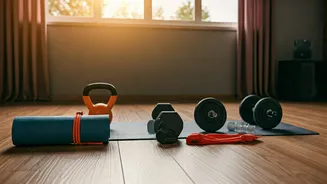

Embrace Winter Workouts
Winter often presents challenges to maintaining fitness. Shorter days, colder temperatures, and the appeal of comfort foods can work against our health
ambitions. However, by adopting a smart and consistent approach, weight loss during winter is not only achievable but may even be enhanced. Studies suggest that cold exposure can slightly increase calorie expenditure, as the body works harder to maintain its core temperature. Yet, behavioral factors, such as reduced sunlight affecting our circadian rhythm and mood, can increase cravings for calorie-dense foods. According to a study, winter months are linked with lower physical activity and more sedentary time, particularly for those with desk jobs. The key is structured indoor workouts, rather than relying on incidental movement. This article presents nine accessible exercises that can be performed at home, to support weight loss this winter.
Jumping Jacks Ignite
Jumping jacks are a classic, full-body cardio exercise. They quickly elevate your heart rate and improve circulation, which can be particularly beneficial during cold weather when joints might feel stiff. Research confirms that short bursts of moderate-to-vigorous movement improve metabolic rate and cardiovascular endurance. Aim for 30–60 seconds of jumping jacks to warm up your muscles and start burning fat without stepping outside. This simple yet effective exercise engages multiple muscle groups and gets your heart pumping, making it a great way to kick-start your indoor workout. They are easy to do in a small space and require no equipment, making them ideal for anyone looking to increase their fitness level.
Bodyweight Squat Power
Bodyweight squats target large muscle groups, including thighs, hips, and glutes, which are metabolically active tissues. Resistance-based exercises, such as squats, boost your resting metabolic rate by building lean muscle mass. Additionally, they improve joint mobility and balance. This makes them especially useful during winter when inactivity can worsen stiffness. Squats also support lower-body strength, which is vital for daily activities. Performing squats helps increase calorie expenditure and strengthens the core. The exercise is adaptable for all fitness levels. Those new to squats can start by doing a modified version, such as squatting against a wall. The key is to maintain the correct form, ensuring the knees do not extend past the toes, and the back remains straight.
High Knees Cardio
High knees provide a great indoor cardio move that mimics brisk walking or jogging. They elevate your heart rate, activate your core muscles, and improve coordination. Such dynamic movements enhance glucose uptake by muscles, aiding in blood sugar regulation. This makes them a great option for weight management. High knees are also convenient. All that's needed is a small space. Start with a slow pace and gradually increase the speed and intensity as you become more comfortable. High knees also engage the core muscles, which contributes to overall stability and balance. You can incorporate high knees into your routine as part of a circuit or as a warm-up activity before other exercises. It’s an exercise that can be modified to suit individual fitness levels, providing an effective cardio boost.
Plank Core Strength
Planks build deep core muscles, supporting posture and spinal health. A strong core improves overall movement efficiency. Research links core stability training to improved functional fitness and reduced injury risk. This is particularly beneficial for sedentary individuals resuming activity during winter. The plank is a static exercise, meaning there's no movement. However, it still activates many muscle groups. It's an ideal choice for strengthening the core, which supports all movements. Make sure to keep your body in a straight line from head to heels. Hold the position for as long as possible while maintaining proper form. It can be easily integrated into a workout routine. Increase the holding time as your strength builds. The plank is versatile and can be modified for any fitness level.
Push-Ups Upper Body
Push-ups are effective for building upper-body strength while engaging the core. Strength training helps maintain muscle mass during weight loss, preventing metabolic slowdown, a common concern during winter dieting. Modified push-ups against a wall or on your knees can make the exercise accessible for beginners. The exercise focuses on the chest, shoulders, and triceps, while also engaging the core for stability. They're a great choice for those looking to build upper-body strength without the need for equipment. Starting with a wall push-up can make it easier to gradually transition to a full push-up. Make sure to maintain the correct form and avoid letting your back sag. Regular practice will help build strength and improve the number of push-ups you can perform.
Mountain Climbers Cardio
Mountain climbers combine cardio and strength training in one dynamic movement. They activate your arms, shoulders, core, and legs simultaneously. Compound exercises that involve multiple muscle groups increase calorie burn and cardiovascular demand more efficiently. This exercise offers a full-body workout that also boosts your heart rate. Mountain climbers are very effective because they can be easily modified. Start slowly and gradually increase the pace as you build endurance. Be mindful of your form. Keep your core engaged and your back straight. Maintaining proper form helps maximize the benefits of the exercise. Performing this exercise offers an excellent calorie-burning workout. It can be easily integrated into any home exercise routine. It improves both strength and endurance.
Wall Sit Endurance
Wall sits are an isometric exercise that strengthens thighs and improves muscular endurance. Isometric exercises increase muscle activation without dynamic movement, making them safe and effective in confined indoor spaces. They also enhance lower-body strength, which is needed for daily activities. Find a wall and position your back against it. Slowly slide down until your thighs are parallel to the floor. Hold this position, keeping your back flat against the wall. Concentrate on maintaining proper form. The wall sit is a great exercise for building both strength and endurance in the lower body. Increase the holding time as you get stronger. It is an excellent choice for a quick and effective workout, requiring minimal space and no equipment. Be sure to engage your core for stability.
Spot Marching Movement
Spot marching, or indoor walking, may seem simple but keeps the body moving during long sedentary hours. Consistent, low-intensity movement across the day significantly contributes to energy expenditure. It is joint-friendly and ideal for older adults or those restarting fitness routines in winter. Engage your core while marching in place, maintaining a steady pace. You can incorporate it into your routine throughout the day to increase overall activity levels. It's a simple, effective, and low-impact exercise. The exercise is adaptable to all fitness levels. Increase the pace to add intensity and burn more calories. It is a good option to help avoid the winter blues. This exercise is also a great choice if you are starting a fitness program in winter.