





A New Era of Robotics
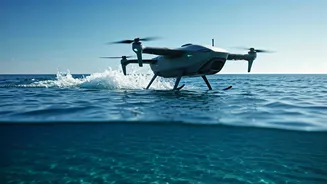
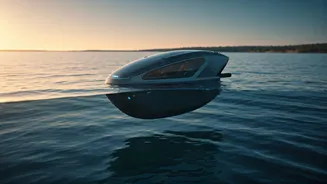
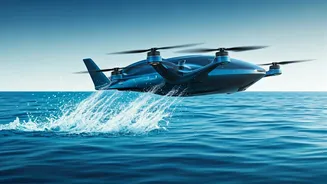
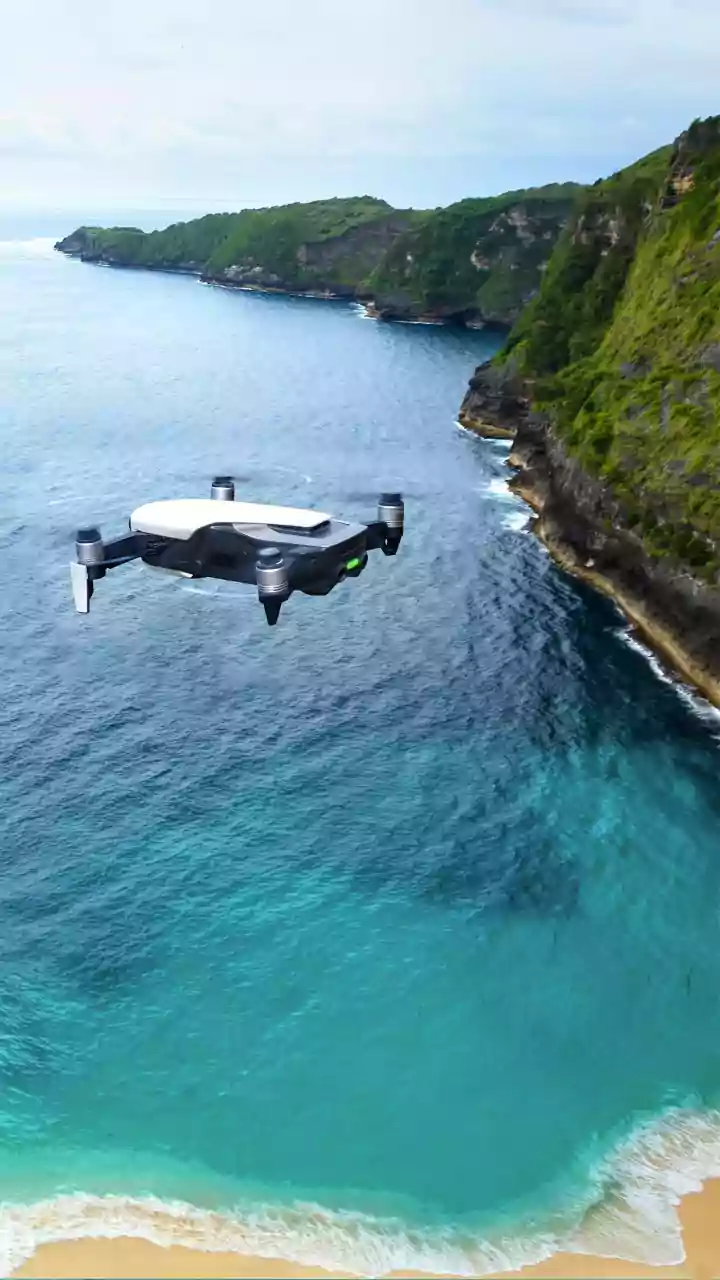
India has taken a significant stride forward in the realm of autonomous technology with the introduction of 'Avataar,' a pioneering amphibious drone. This
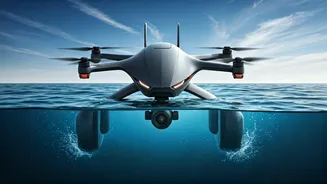
remarkable innovation hails from Bengaluru-based AquaAirX Autonomous Systems, a company dedicated to creating specialized drones for challenging environments like oceans, rivers, and coastlines. The development of Avataar represents a substantial advancement in India's defense and scientific research sectors, offering a unique dual-domain operational capability. The project received crucial early-stage support from Rainmatter, an entity known for championing technologically driven advancements. Unlike traditional drones confined to the skies, Avataar is engineered to perform exceptionally in both aerial and submerged scenarios, marking a pivotal moment for the nation's burgeoning robotics and surveillance expertise.
Unmatched Durability and Design
Avataar's robust design is a testament to its suitability for harsh marine conditions. Its frame is constructed from carbon fiber, meticulously treated to be impervious to saltwater and resist corrosion. Furthermore, special coatings are applied to repel salt deposits and sensor grime, ensuring sustained performance even in aggressive environments. This attention to detail in material science and protective measures was highlighted by Gouthami TS, the Founder and CEO of AquaAirX. Crucially, Avataar has achieved Technology Readiness Level 6 (TRL 6), a significant milestone that confirms its readiness beyond mere laboratory prototypes. The drone has successfully undergone rigorous testing in real-world aquatic settings, demonstrating its resilience against varying pressures and currents, thereby clearing a critical hurdle for future advanced trials and eventual mass production.
Seamless Air-to-Water Functionality
At its core, Avataar is an intelligent drone capable of both aerial flight and autonomous underwater navigation, a feat previously unimaginable for a single machine. It elegantly combines the agility of a quadcopter with the robust resilience required for submerged operations, enabling continuous surveillance above and below the water's surface. For maritime forces like India's Navy and Coast Guard, this translates into a single drone that can initially scout for vessels from the air and subsequently dive to inspect the hull or identify submerged threats. To maintain precise positioning and counteract drift from ocean currents, Avataar employs an advanced speed monitoring system that constantly tracks its movement relative to the seabed, ensuring accurate location awareness. Communication with the surface is facilitated through acoustic waves, acting as an underwater equivalent to Wi-Fi, transmitting data without physical tethers. Navigation back to its base is managed by an integrated timer that calculates distance and direction, allowing for independent mission completion.