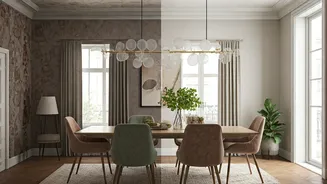







Ultra-Modern Feels Dated
The era of stark, ultra-modern dining rooms is drawing to a close, according to interior design experts. Contemporary trends now lean towards creating
warmer, more inviting spaces that reflect personality. Designers suggest moving away from minimalist extremes and instead embracing a blend of traditional elements, vintage finds, and personal keepsakes. This approach aims to evoke a sense of nostalgia and individuality, making the dining room a more curated and meaningful area. Incorporating natural materials like wood and handcrafted textiles can beautifully bridge the gap between modern sensibilities and classic charm, resulting in a dining space that feels both sophisticated and deeply personal. The goal is to move beyond a sterile, contemporary look towards an environment that feels lived-in and cherished.
Ditch Single-Function Design
Gone are the days when a dining room was strictly reserved for formal dinners. Today's designers advocate for making these spaces highly functional and adaptable to a variety of activities. Instead of designing a room solely for special occasions, consider its potential for everyday use, from casual family meals to lively game nights. This shift towards multi-purpose design necessitates a thoughtful selection of materials that can withstand frequent use and are easy to maintain. Think about opting for durable upholstery on chairs, comfortable yet resilient rugs, and table linens that don't require delicate handwashing. Prioritizing durability and ease of care ensures your dining room can seamlessly transition between different functions without compromising on style or practicality, making it a more valuable and utilized part of your home.
Say No to Muted Palettes
The reign of muted, neutral color palettes in dining rooms is officially over. Designers are encouraging homeowners to embrace vibrancy and make bold statements with color. Instead of relying on subtle shades of gray and ivory, consider infusing your dining space with energetic hues or striking furnishings. Art is an excellent way to introduce instant color and personality; explore your existing collection or find pieces that resonate with you. Framing artwork and creating a gallery wall can transform a plain space into a dynamic focal point. Beyond aesthetics, carefully chosen art serves as a natural conversation starter, adding an engaging element for guests during meals and fostering a more lively dining experience.
Avoid the Accent Wall
While accent walls once served as a popular design trick, interior designers are now advising against them for dining rooms. The concept of dedicating a single wall for a different color or texture can detract from the overall cohesion and sophistication of the space. Instead of isolating one wall, designers recommend extending a chosen paint color or wallpaper across all walls. This unified approach creates a more elevated and immersive atmosphere, making the room feel more thoughtfully designed and harmonious. Covering the entire room with a consistent design element provides a sense of completeness and allows the room's furnishings and decor to shine without being interrupted by a jarring visual break.
Mix Up Furniture Sets
The notion of purchasing a perfectly matched dining table and chair set is becoming passé. Designers now champion a more eclectic and personalized approach to furnishing dining spaces, encouraging the mixing and matching of different pieces. This strategy allows for the creation of a more unique and curated aesthetic, reflecting individual style rather than a pre-packaged look. Combining a modern table with vintage chairs, or vice versa, can result in a more intriguing and sophisticated ambiance. Exploring secondhand shops for distinctive items or incorporating cherished family heirlooms alongside contemporary furniture pieces can contribute to a dining room that feels collected, deeply personal, and undeniably stylish.