






The Plasma Promise
The quest for swifter and more economical transportation has spurred the development of innovative propulsion systems. Among the most compelling breakthroughs
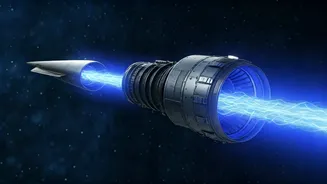
in recent times is the electric plasma jet engine. This battery-operated thruster harnesses the power of superheated plasma and compressed air to achieve astonishing speeds, potentially reaching up to 20 kilometers per second. If this groundbreaking technology could be fully realized, it would usher in an unparalleled era for travel advancements. However, a persistent challenge continuously hinders its progress: the sheer bulk and excessive weight of the batteries required to supply the necessary energy.
Powering the Plasma
To generate the extreme heat and volume of plasma essential for a plasma jet engine to operate effectively, immense amounts of electrical energy are indispensable. Consequently, for an aircraft equipped with these advanced engines to achieve flight, it would necessitate the integration of a substantial, dedicated power plant directly on board. Even if a suitable location for such a unit could be identified, the added weight would render the aircraft far too heavy to even contemplate taking off. While continuous research and development are ongoing, plasma-powered aviation remains an aspirational goal for the present.
Plasma vs. Jet Fuel
A conventional jet engine operates by igniting a mixture of compressed air and petroleum-based jet fuel. In contrast, a plasma jet engine adheres to similar fundamental principles but with a critical divergence: it substitutes jet fuel with plasma, which is produced from superheated air particles. Theoretically, a plasma jet engine could produce thrust comparable to conventional engines, sufficient for takeoff, by utilizing this plasma in an explosive manner. The fundamental difficulty arises because plasma only materializes in environments characterized by extreme heat and high electrical charge, akin to the core of a collapsing star or a lightning strike. Generating such conditions requires a significant energy input.
The Energy Conundrum
While it is not impossible to create a functioning plasma jet engine, the right apparatus is crucial. Researchers have successfully demonstrated such engines, for example, by using a specially designed quartz tube containing low-temperature plasma, energized by a magnetron emitter, similar to a high-powered microwave. However, this process demands a consistent and substantial power supply. As of now, there is no feasible method to generate this level of power on an aircraft. Whether employing an array of smaller plasma thrusters or a single large one, the required power plant would be prohibitively large and heavy. On a more optimistic note, promising research in space exploration has shown that plasma engines could drastically cut travel times to Mars, potentially to just 30 days. For terrestrial travel, however, a breakthrough in battery technology—making them significantly smaller and lighter—is essential before plasma jet engines become a practical reality.