






Lunar Landing Legacy
NASA's groundbreaking Artemis program, aimed at returning humans to the Moon, is keenly anticipating the development of sophisticated private lunar landers.
This endeavor is crucial for establishing a sustainable presence on the lunar surface, following the recent success of the Artemis 2 mission which orbited the Moon. The agency's strategy now involves a phased approach, with a crewed orbital docking test slated for late 2027, preceding a full lunar landing target for Artemis 4 in late 2028. This adjusted timeline places significant pressure on commercial partners to finalize their lander designs and rigorous testing protocols. The success of these missions, particularly the lunar landings, is paramount to advancing humanity's exploration of space and unlocking new scientific discoveries beyond Earth.
Starship's Orbital Hurdles
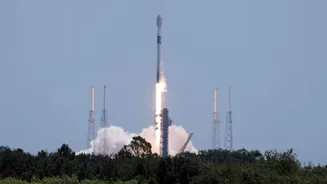
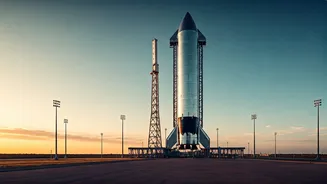
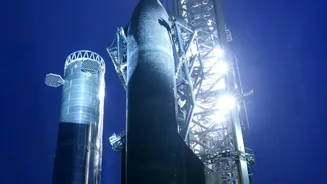
SpaceX, selected in 2021, is developing its Starship Human Landing System (HLS), a vital component for ferrying astronauts from lunar orbit to the Moon's surface and back. This ambitious system is built upon SpaceX's fully reusable Starship rocket. While the company reports significant progress on numerous aspects, including life support, landing engines, and airlocks, several major obstacles remain. A critical challenge is demonstrating orbital refueling, a process requiring multiple Starship tanker launches to supply the HLS with the vast amounts of propellant needed for its lunar journey. Furthermore, SpaceX must prove Starship's capability for prolonged orbital operation while supporting astronaut crews. Recent Starship test flights, including booster recoveries and engine relights, are paving the way for future operational lunar missions, with the upcoming Version 3 flight expected to be pivotal.
Blue Origin's Gradual Ascent
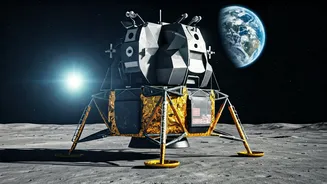
Blue Origin is advancing its Blue Moon Mark 2 lunar lander, chosen by NASA in 2023 for future Artemis missions. Their development strategy contrasts with SpaceX's rapid pace, favoring a more step-by-step methodology. The company intends to first validate its smaller, uncrewed Blue Moon Mark 1 cargo lander before proceeding to crewed missions. This cargo variant recently underwent crucial thermal vacuum chamber testing at NASA facilities. The Mark 1, also recognized as Endurance, is slated for a lunar cargo mission later this year, intended to showcase its autonomous navigation, precision landing, and cryogenic propulsion technologies. It will also transport scientific payloads to the lunar south pole. However, Blue Origin faces its own set of challenges, including recent launch anomalies with its powerful New Glenn rocket, which could impact development schedules. Like its competitor, Blue Origin must also finalize astronaut life support system testing and confirm its lander's safety for crewed lunar operations.
Readiness is Key
NASA has unequivocally stated that mission readiness will be the deciding factor in determining which company earns the initial opportunity to land astronauts. Both SpaceX and Blue Origin have affirmed their commitment to preparing for the planned 2027 orbital docking demonstrations. The agency's pragmatic approach suggests a flexible strategy: the company that successfully completes its testing first could secure its position as NASA's primary lunar landing partner for the Artemis 4 mission. Consequently, the upcoming year is poised to be exceptionally critical for both programs. Starship and Blue Moon are transitioning from their development and ground-testing phases into the complex operational realities of crewed lunar missions, marking a pivotal moment in space exploration.