





Understanding Pineapple Core
The central core of a pineapple, often discarded, is perfectly edible though its density and fibrous nature can make it less appealing when eaten raw.
This structural difference stems from the pineapple's unique formation as a cluster of fused berries supported by a central spine. The core's thicker cell walls and reduced water content contribute to its firmness and chewy texture, and also impact its flavor perception, making it taste less sweet and sometimes even slightly astringent or vegetal. Contrary to myth, the core is not toxic; in fact, it is abundant in bromelain, an enzyme known for its anti-inflammatory properties and responsible for the characteristic tingling sensation some experience when eating pineapple, particularly the core. Recognizing these characteristics is the first step in unlocking its culinary potential.
Seamless Blending and Pureeing
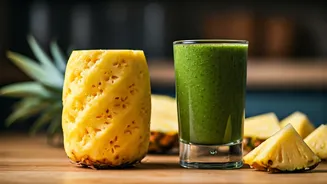
To overcome the core's textural challenges, blending is an exceptionally effective method. By mechanically breaking down the dense fibers, the core can be seamlessly incorporated into various dishes. Consider dicing the core into small pieces and freezing them before adding them to smoothies, alongside other fruits like strawberries or mangoes. This approach not only masks any less desirable fibrousness and astringency but also imparts a distinct pineapple flavor to the beverage. For a smoother outcome, similar to how one would process ginger, slicing the core thinly against the grain before pureeing can ensure it integrates without any noticeable chewiness, making it ideal for sorbets and creamy concoctions. This technique ensures that the core's essence is captured without its characteristic toughness.
Baking and Roasting Innovations
For bakers and those who enjoy roasting, the pineapple core offers unique possibilities. The key lies in altering its texture through fine dicing or roasting. Incorporating finely diced pineapple core into recipes like carrot cake or loaf cakes can add a delightful texture and subtle flavor. To balance the core's natural tartness, a slight increase in added sugar is often recommended. Roasting presents another avenue for transformation. Thinly slicing the core, particularly across the grain to shorten fibers, and roasting at around 350°F can yield tender, slightly caramelized pieces. While roasting softens the structure and enhances sweetness, a finer mince before roasting can further improve the texture and encourage deeper caramelization, making it a plausible addition to tacos, fried rice, or even as a topping for oatmeal and yogurt. Mixing the chopped core with sweeter pineapple flesh during roasting can also produce excellent results, effectively harmonizing their flavors.
Flavor Infusions and Syrups
Extracting the flavor of the pineapple core without dealing with its texture is highly effective for creating infused liquids and syrups. Simmering diced core in water, with optional additions like lemon rind and sugar, can yield a fragrant pineapple syrup free from fibrousness or astringency. This syrup serves as a versatile ingredient for cocktails, mocktails, or drizzling over desserts. Similarly, bartenders often utilize pineapple scraps, including the core, for beverages like tepache, a lightly fermented Mexican drink. By combining the core with piloncillo, water, and spices, natural yeasts can ferment the mixture into a low-alcohol beverage. The core can also be used to create infusions for teas, flavored water, or spirits, where slow simmering softens the structure and transfers flavor compounds into the liquid, providing a delightful pineapple essence for various drinks. This method effectively captures the pineapple's essence in a drinkable form.
Marinades and Flavor Enhancements
Beyond sweet applications, the pineapple core proves valuable in savory dishes, particularly as a natural tenderizer in marinades. The bromelain enzyme present in the core actively breaks down proteins, making it an excellent addition to marinades for pork or chicken. A simple blend of core, pineapple juice, soy sauce, garlic, ginger, and rice vinegar can create a flavorful and effective marinade. Furthermore, the core's firm texture lends itself well to pickling; when sliced and added to a brine alongside other vegetables, it absorbs the pickling flavors, offering a unique sweet and tangy element. Even for stock or broth, adding the core during simmering can impart a subtle sweetness and tropical note, enhancing the base for soups and stews. These savory uses highlight the core's versatility in the kitchen.