







Power Stability Boost
The Maharashtra State Electricity Transmission Company Limited (Mahatransco) has officially brought online the Babhaleshwar-Kudus 400kV transmission line,
a development poised to dramatically improve the stability of power supply throughout the Mumbai Metropolitan Region (MMR). This new infrastructure is designed to significantly enhance the efficiency of electricity distribution in key districts, including Mumbai, Thane, Palghar, and Ahilyanagar. By reducing transmission losses by an estimated 5 MW, the line will contribute to a more robust and reliable power network. Furthermore, it is expected to markedly improve voltage levels, ensuring that the power delivered is of consistent quality. The project's successful commissioning marks the end of a protracted journey, promising immediate benefits to millions of residents and businesses within the MMR.
Capacity and Demand Management
Beyond merely stabilizing the existing power supply, the newly operational Babhaleshwar-Kudus 400kV line introduces a substantial increase in power transfer capacity, capable of accommodating up to an additional 3000 MW. This surge in capacity is particularly crucial for managing the ever-growing electricity demand, driven by the rapid development and expansion of the Mumbai region. The state-run utility highlighted that this enhanced capability will allow for more effective management of peak loads and ensure that the power grid can adequately support the region's burgeoning needs. The ability to transfer this much additional power is a significant stride towards future-proofing the energy infrastructure of one of India's most vital economic hubs.
Overcoming Decadal Hurdles
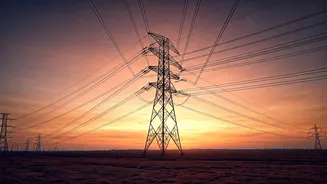
The journey to energize the 228 km Babhaleshwar-Kudus line, which required the installation of 715 transmission towers, was fraught with challenges that led to a delay of over a decade. Originally slated for completion in 2013, the project was stalled by a complex web of technical and administrative obstacles. Among the most unique challenges faced were the necessity to obtain special permissions for construction in the vicinity of the Giant Metrewave Radio Telescope (GMRT) in Pune district, stringent forest clearances, difficulties in securing rights of way, and intricate land compensation issues. In certain ecologically sensitive forested stretches, project materials even had to be transported manually, underscoring the extraordinary efforts undertaken to surmount these impediments. The project's final push to completion in March 2026 was facilitated by expedited governance and coordinated actions across various state agencies.
Decongestion and New Source
The commissioning of the Babhaleshwar-Kudus transmission line is set to bring about significant relief to the existing power infrastructure. It is expected to effectively de-congest the heavily utilized Padghe-Babhaleshwar transmission corridor, a critical artery for power flow into the region. Furthermore, this new line will establish a vital and independent power source for the Kudus substation, thereby diversifying and strengthening the overall power supply network. This dual benefit of easing congestion on established routes while introducing a new, robust power conduit is essential for ensuring the continued reliable and uninterrupted electricity supply to the sprawling Mumbai Metropolitan Region, especially as its energy demands continue their upward trajectory.