




The Microplastic Menace
Microplastics, tiny plastic particles less than 5 millimeters in size, have become a pervasive global pollutant, contaminating our water sources and posing
potential risks to human health. Traditional methods for removing these microscopic invaders often involve complex chemical processes or expensive filtration systems. This presents a significant challenge, particularly for developing regions or rural communities where access to advanced water treatment facilities is limited. The urgent need for a more accessible, affordable, and environmentally friendly solution has driven scientific exploration into natural alternatives. Scientists are now investigating readily available natural resources that could offer a sustainable path towards microplastic-free water, potentially transforming how we approach water purification on a large scale.
Moringa's Purifying Power
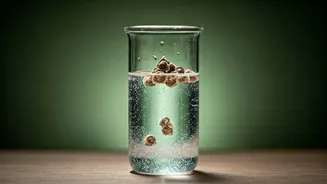
Recent research has highlighted the remarkable water-purifying capabilities of moringa seeds, a plant native to India known for its nutritional richness. Studies conducted by scientists, including those at the Institute of Science and Technology of São Paulo State University, reveal that extracts from moringa seeds can effectively clump microplastic particles together. This natural coagulation process significantly aids in their removal from water. The plant-based extract has demonstrated performance comparable to, and in some cases superior to, conventional chemical treatments like aluminum sulfate. This efficacy makes moringa a highly promising candidate for a natural, low-cost water purification method that can be implemented without requiring sophisticated infrastructure.
How Coagulation Works
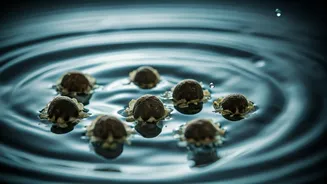
The effectiveness of moringa seed extract in removing microplastics hinges on the principle of coagulation. Microplastics and other suspended impurities in water often carry a negative electrical charge, causing them to repel each other and remain dispersed, making filtration difficult. Coagulants, whether derived from natural sources like moringa or synthetic chemicals such as aluminum sulfate, work by neutralizing these negative charges. This neutralization allows the microplastic particles to aggregate, forming larger, heavier clusters known as flocs. These flocs can then be easily separated from the water through subsequent filtration processes, such as passing through a sand filter, thereby enhancing the overall clarity and purity of the water.
A Sustainable Alternative
The application of moringa seed extract as a water purifier presents a sustainable and economically viable alternative to conventional chemical treatments. While chemical coagulants like aluminum sulfate are effective, they can sometimes lead to an increase in dissolved organic matter, potentially increasing treatment costs. Moringa, on the other hand, offers a natural and potentially less expensive solution. Its effectiveness, particularly in in-line filtration methods that require relatively clear water with low turbidity, makes it ideal for smaller-scale applications. This could revolutionize water treatment in rural properties and small communities, offering a tangible pathway to safer drinking water without the burden of high costs or complex technological requirements, thereby promoting environmental health and public well-being.
Home-Based Moringa Solutions
For those interested in harnessing moringa's purifying power, the preparation of moringa seed extract can be approached with simple home-based methods, making the solution even more accessible. While the article provided methods for making 'Moringa Salt' for culinary use, the underlying principle of utilizing moringa leaves and seeds for purification can be explored through various preparations. The key is to extract the active compounds from the moringa plant that facilitate coagulation. Earlier research by the same groups also confirmed moringa seeds' effectiveness throughout the entire water treatment cycle, including flocculation, sedimentation, and filtration. This indicates that with simple processes, the benefits of moringa can be brought directly into households and local communities, promoting self-sufficiency in water purification efforts.