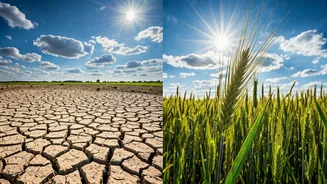







Food Security Achieved?
India has made significant strides in achieving food security; however, nutritional security remains a major challenge. The focus on simply providing enough
food has overshadowed the importance of ensuring that the food consumed is also nutritionally adequate. A key issue contributing to this is the quality of the soil. When soil is degraded, it lacks the essential minerals and nutrients that plants need to thrive. Consequently, the crops grown in such soil are less nutritious. This situation creates a vicious cycle, where the population consumes food lacking essential nutrients, leading to malnutrition despite access to meals like dal-chawal.
Soil Degradation Explained
The health of India's soil is in an alarming state, with soil degradation being a major contributor to the malnutrition crisis. Overuse of fertilizers, unsustainable farming practices, and deforestation have all led to soil degradation. This means the soil loses its natural ability to retain nutrients and support healthy plant growth. Think of the soil not as a machine that can be endlessly exploited, but as a living ecosystem that needs careful maintenance. Without healthy soil, the crops grown on it will inevitably be deficient in crucial vitamins and minerals, directly impacting the nutritional value of the food supply. This issue has severe implications for public health.
Staple Food Nutrient Deficiencies
India's reliance on staple foods like wheat, rice, and pulses is a part of its cultural identity. However, these foods, in their current form, often lack essential nutrients. The issue stems from the nutrient deficiencies in the soil, which are transferred to the crops. Because the soil is unhealthy, these crops fail to accumulate the necessary vitamins and minerals that would otherwise make them nutritious. This leads to a situation where the majority of the population consumes meals primarily consisting of these deficient staples. Consequently, this exacerbates the problem of malnutrition, even among those who consume regular meals. The focus must be on improving the nutritional value of these staples.
Think Tank Recommendations
Various think tanks have been working to analyze and understand the challenges that lead to malnutrition in India. These organizations have offered recommendations to address this complex issue. Key among these are suggestions for sustainable agricultural practices, soil health improvement strategies, and policy changes to promote food diversification. These recommendations frequently include measures to restore soil health, such as reducing the use of harmful chemicals, promoting organic farming methods, and implementing crop rotation strategies. The overarching aim is to ensure that the staple foods consumed by the Indian population are packed with essential nutrients.