



Core's True Purpose
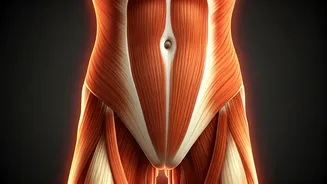
The Pallof press, often underestimated, is a cornerstone for developing a truly functional core. Its primary role isn't about generating movement, but
rather about staunchly resisting unwanted motion, particularly rotation. This anti-rotational capability is crucial for maintaining spinal stability and efficiently transferring force during dynamic activities and heavy lifting. Many dismiss the Pallof press due to its perceived simplicity, overlooking the significant challenge it poses to the core's stabilizing muscles. By strengthening the core's ability to prevent rotation and maintain a rigid posture, individuals can prevent energy leaks during powerful movements, leading to more potent and controlled performance across various athletic endeavors. This foundational strength translates directly into improved stability and power generation, setting apart those who exhibit exceptional control from those who struggle to maintain tightness under duress.
Benefits of Variations
Expanding upon the standard Pallof press introduces a wealth of benefits by challenging the core from multiple dimensions. These variations are meticulously designed to train the core's real job: resisting unwanted movements like rotation and extension, while enhancing overall body stability. This directly contributes to improved strength transfer, meaning that force generated by your lower body can be more effectively transmitted through your midsection to your upper body, making exercises like squats and deadlifts feel more potent and controlled. Furthermore, these diverse approaches improve stability from every conceivable angle, forcing your core to adapt and strengthen in unique ways. Crucially, Pallof press variations are exceptionally back-friendly, allowing for frequent core training without imposing excessive stress on the lumbar spine, thus promoting consistent development and reducing the risk of overuse injuries.
Split Stance Press
The split stance Pallof press introduces an asymmetry that significantly amplifies core engagement. Performed with one knee on the ground and the other leg extended forward towards the resistance anchor, this variation demands substantial adductor and glute activation simultaneously. While pressing the resistance straight out, the primary challenge is to prevent your torso from rotating towards the anchor. This position not only strengthens the core's anti-rotational capacity but also enhances the stability and force transfer capabilities when the body is in an off-balance situation. By engaging the adductors and glutes of the front leg, you create a more robust base of support, further challenging your core to maintain a neutral spine and resist lateral flexion. Ensure you brace your core and squeeze the inner thigh and glute of your extended leg before initiating the press for maximum benefit. This variation is ideal for building resilience against uneven forces experienced during sports or everyday activities.
Isometric Holds & Chaos
The iso Pallof press elevates the challenge by focusing on sustained tension rather than repetition. Instead of pressing in and out, you hold the fully extended position for a specified duration, forcing your core to maintain its braced state and resist rotation without any breaks. This significantly increases time under tension, building impressive muscular endurance and reinforcing the ability to stay locked in. Following this, the chaos Pallof press introduces an element of unpredictability. By attaching a weight plate to a band, the resistance becomes unstable and constantly shifting, forcing your deep core stabilizers to make rapid micro-adjustments to maintain position. This dynamic stimulus is excellent for developing reactive stability, teaching your body to adapt and counteract unexpected forces, which is invaluable for preventing injuries and enhancing athletic performance. Moving slowly and maintaining tightness is key to maximizing the benefits of both these challenging variations.
Half-Kneeling & Overhead
The half-kneeling Pallof press refines core stability by reducing the lower body's base of support. With one knee on the ground and the other foot planted firmly, this position naturally restricts excessive hip movement, forcing the core and hips to work harder to maintain balance and prevent rotation. It effectively locks the pelvis in place, minimizing compensatory movements and enhancing the ability to generate a strong brace. Complementing this, the overhead Pallof press shifts the resistance vector, introducing a potent anti-extension challenge. By pressing the resistance vertically above your head, the core, particularly the anterior chain and lower back, must work harder to prevent the torso from arching or extending. This requires a greater degree of core engagement to maintain a neutral spine and keep the ribs stacked over the hips, promoting a more resilient and powerful upper-body pressing capability.
Single-Leg Balance
For those seeking to significantly amplify the balance and stability demands, the single-leg Pallof press is an exceptional choice. By removing one point of contact with the ground, this variation drastically increases the challenge for your core and proprioceptive system. As you press the resistance outwards, your core must work overtime to counteract the rotational forces while your single supporting leg and hip work to maintain overall body equilibrium. This exercise is a fantastic developer of unilateral control, improving coordination and challenging your ability to stay stable when faced with asymmetrical loading. It directly mimics many real-world scenarios and athletic movements where maintaining balance on one leg while performing an action is critical. Maintaining a slight bend in the working knee and ensuring your core is actively braced are essential cues for maximizing the effectiveness and safety of this demanding variation.
Alphabet & Split Squat
The Pallof press alphabet introduces a novel way to challenge core stability and introduce dynamic control. While maintaining a steady, isometric contraction in your core and arms, you trace the letters of the alphabet in the air with the resistance. This combines the sustained tension of an isometric hold with the continuous, multi-directional movement of drawing shapes, significantly increasing instability and demanding fine-tuned control from multiple core angles. It's a mentally and physically engaging variation that enhances proprioception and muscular endurance. Merging lower-body strength with anti-rotational core work, the split squat Pallof press adds another layer of complexity. By holding a deep split squat position – which inherently creates tension in the legs and hips – you concurrently perform the Pallof press, forcing your core to work even harder to resist rotation while your lower body is under significant load. This synergy builds impressive integrated strength and stability.
Deadbug & Glute Bridge
The deadbug with Pallof press is a highly integrative exercise that synergizes two potent core-strengthening movements. By combining the controlled limb movements of the deadbug with the anti-rotational demands of the Pallof press, this variation significantly increases the coordination and stability requirements. Your core must work to stabilize your trunk while your limbs are moving dynamically, providing excellent training for athletic coordination and the precise control of spinal movement. Simultaneously, the glute bridge Pallof press adds hip extension into the core stability equation. As you elevate your hips into a bridge, simultaneously resisting rotational forces, you create a multifaceted challenge that links glute engagement directly with core stability. This reinforces the critical relationship between powerful hip extension and a stable, resilient back, requiring you to maintain tension in your glutes and core without letting your hips drop or rotate.
Programming Strategies
Effectively integrating Pallof press variations into your training regimen requires strategic placement based on your goals. For a potent warm-up, opt for less demanding variations like the half-kneeling or standard Pallof press to activate your core and prepare it for heavier lifting, ensuring you are already braced and stable before tackling your main lifts. To specifically enhance core strength and resilience, incorporate isometric holds and chaos Pallof presses into your post-main lift accessory work; these variations excel at building the deep stability that directly translates to improvements in heavy compound movements like squats and deadlifts. A highly effective strategy is to pair Pallof presses directly with your major lifts. For instance, after completing a set of squats, immediately transition into a Pallof press variation. This approach reinforces proper bracing mechanics and helps you maintain superior core tension throughout your subsequent sets, maximizing the benefits of both exercises.
Ultimate Core Development
The overarching principle behind all Pallof press variations is their unparalleled ability to teach the body to resist movement, effectively transfer force, and maintain a stable, 'tight' core under load. This fundamental skill is what directly correlates to significant gains in lifting capacity, enhanced athletic performance, and a substantial reduction in the likelihood of performance-hindering breakdowns or injuries. Rather than simply accumulating more core exercises, the focus should shift towards employing 'better' ones that address the core's true functional responsibilities. The ten variations presented here offer a comprehensive toolkit for achieving precisely that, providing diverse and challenging ways to build a core that is not only strong but also highly adaptable and resilient, ready to support your most demanding physical pursuits.