




Chilli: A Fiery Import
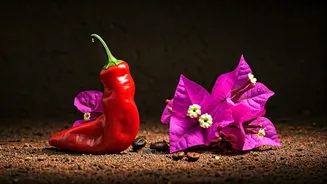
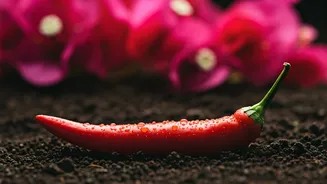
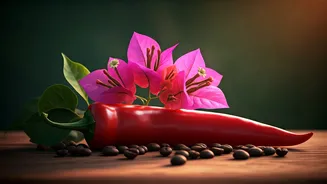
It's nearly impossible to envision Indian cooking without the essential kick of chilli peppers, yet this staple ingredient isn't a native of the subcontinent.
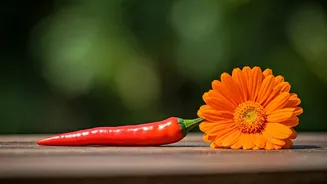
Its journey to India began with Portuguese mariners in the 15th and 16th centuries, who introduced it from its ancestral lands in Central and South America. Before the widespread adoption of chillies, the flavour profile of Indian dishes relied heavily on indigenous spices like black pepper and long pepper for heat. However, chillies proved remarkably adaptable to India's diverse climates, swiftly becoming a fundamental component in regional cuisines across the nation, transforming culinary traditions forever.
Bougainvillea's Tropical Bloom
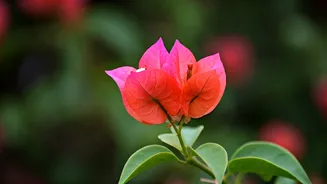
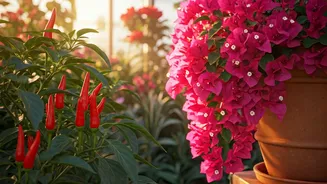
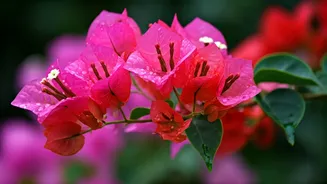
The dazzling bursts of colour provided by bougainvillea, adorning countless Indian streets and compound walls with their vibrant pinks, purples, oranges, and whites, are a familiar sight. However, this visually striking plant's true home lies in the diverse landscapes of South America, particularly in countries like Brazil, Peru, and Argentina. Its popularity soared in tropical and subtropical regions worldwide due to its exceptional resilience to drought and its intensely vivid appearance. The plant's unique structure, where colourful bracts surround inconspicuous flowers, creates a deceptive floral display. Varieties like 'Golden Glow' and 'Louis Wathen' showcase its adaptable nature, thriving in warm climates and adding a splash of exotic beauty to Indian surroundings.
Eucalyptus: Australian Trees
Eucalyptus trees are a ubiquitous presence across India, frequently planted for their valuable timber, contribution to paper production, and rapid growth, which provides quick greenery. Surprisingly, this widespread tree species originates from Australia, along with nearby islands. Introduced during India's colonial era, eucalyptus was highly favoured for its remarkable growth speed. Despite its utility, its ecological footprint has been a subject of ongoing environmental debate. Concerns have been raised about certain eucalyptus species' excessive consumption of groundwater and their potential impact on local plant and animal biodiversity.
Gulmohar's Fiery Display
The magnificent gulmohar tree, renowned for its spectacular display of fiery orange-red blossoms during the summer months, is often mistaken for an indigenous Indian species. However, its origins trace back to the island nation of Madagascar. It has since spread globally and is now a common sight in many subtropical and tropical areas. In India, it has been extensively cultivated, particularly as an ornamental tree in gardens and along avenues, thriving in both moist and dry regions. Its dramatic, spreading canopy and striking visual appeal have cemented its status as a beloved avenue tree in Indian cities and on educational campuses, offering breathtaking beauty each summer.
Papaya: A Sweet Import
The sweet and nutritious papaya is now a ubiquitous fruit, widely cultivated and enjoyed throughout India. Yet, its journey to Indian tables began far away, in Central America and southern Mexico. Introduced to India centuries ago via maritime trade routes, papaya found a perfect home in the country's tropical climate. It quickly became valued not only for its delicious taste and excellent nutritional profile but also for its digestive properties. India currently stands as the world's leading producer of papaya, contributing approximately 3 million tonnes annually to the global output of 6 million tonnes, showcasing its successful integration into Indian agriculture and diet.