






Prototype Undergoes Space Trials
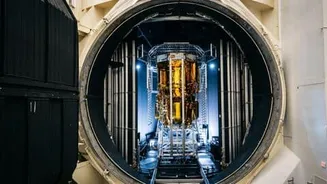
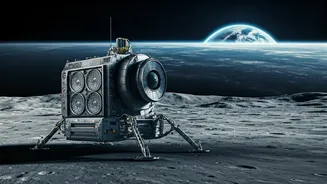
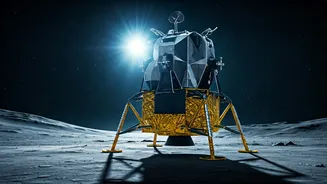
A significant step has been taken in the development of technology destined for the Moon. The Mark 1, an initial prototype of a lunar lander developed
by Blue Origin, has successfully completed a series of critical evaluations within a specialized thermal vacuum chamber at NASA's Johnson Space Center. This sophisticated testing environment is designed to replicate the extreme conditions of outer space, including the near-vacuum and drastic temperature fluctuations that any spacecraft will encounter during its journey and operations. By subjecting the Mark 1 to these simulated conditions, engineers can meticulously assess its structural integrity and the performance of its systems, ensuring it can withstand the harsh realities of the space environment. This process is fundamental for identifying potential weaknesses and validating the design's resilience before it is deployed in actual space missions. The successful completion of these trials signifies a tangible progression in the lander's development, offering valuable data that will inform future iterations of the technology.
Advancing Lunar Ambitions
The successful testing of the Mark 1 prototype is a crucial component of NASA's broader Artemis program, which aims to return humans to the lunar surface. While the Mark 1 itself is not slated for astronaut transport during the Artemis 3 mission, its role is pivotal in refining the technology required for such endeavors. Blue Origin intends to utilize this prototype for an uncrewed cargo delivery mission to the Moon's South Pole later this year, serving as a precursor to more complex operations. The insights gained from this cargo mission and the preceding thermal vacuum tests will directly influence the design of Mark 2, the more advanced landing system intended to carry crews and facilitate the establishment of a sustained human presence on the Moon. This progressive development strategy ensures that each iteration builds upon the successes and lessons learned from its predecessors, steadily moving towards the ambitious goals of lunar exploration and settlement.
Challenges and Future Prospects
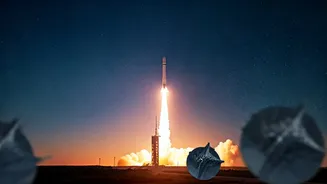
Despite the recent triumphs, the path to regular lunar missions remains complex, with several hurdles yet to be overcome. The development of Blue Origin's New Glenn rocket, the intended launch vehicle for the Blue Moon landers, has encountered significant setbacks, including a recent failure that resulted in the destruction of a satellite. The reliability of this heavy-lift rocket is paramount, as it must be capable of safely transporting the substantial lunar lander, with its powerful, vacuum-rated engines, into orbit. Furthermore, the transition from the Mark 1 to the Mark 2 design presents its own set of engineering challenges, particularly concerning the safety and well-being of astronauts during extended missions. NASA's Artemis 3 mission itself allows for the testing of 'one or both' commercial landers, indicating that plans are flexible and contingent on the readiness of each partner's technology. Simultaneously, a rival development is underway with SpaceX's Starship, which also faces its own testing and readiness challenges before it can be deemed operational for lunar missions.