




Egyptian Milk & Honey
Transport yourself to the era of Cleopatra, whose legendary beauty was attributed to her unique bathing ritual. Facing the arid Egyptian climate, hydration
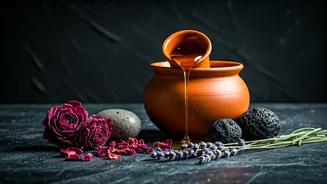
was paramount, and her method of soaking in sour donkey milk and honey was remarkably effective. The lactic acid present in sour milk acts as a gentle alpha-hydroxy acid, exfoliating dead skin cells without abrasion. Honey, a natural humectant, draws moisture into the skin, creating an ultimate hydrating experience. To replicate this ancient luxury, simply add two cups of full-fat milk and half a cup of raw honey to a warm bath and soak for approximately 20 minutes for a supple, moisturized feel.
East Asian Rice Water
Historical accounts often highlight the lustrous, floor-length hair of East Asian women from periods like the Heian era in Japan and among Chinese Yao communities. Their secret wasn't advanced salon treatments but rather the starchy water left over from washing rice. This humble liquid is rich in amino acids and inositol, an antioxidant that can penetrate the hair shaft to mend damage from within. To harness this nourishing power, soak clean, uncooked rice in water at room temperature for 24 hours to allow it to ferment. After shampooing, strain the liquid and apply it generously to your scalp. Let it sit for 20 minutes before rinsing thoroughly to reveal a magnificent shine.
Moroccan Clay & Argan
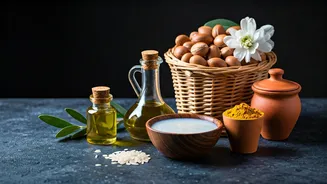
Deep within the Atlas Mountains, Rhassoul clay, a mineral-rich substance teeming with magnesium, has been a cornerstone of Moroccan Hammam traditions for centuries. Women in Morocco have long utilized this purifying clay to draw out impurities, excess sebum, and blackheads from pores without causing dryness or irritation. This cleansing ritual typically concludes with the application of Argan oil, affectionately known as 'liquid gold.' Abundant in Vitamin E and linoleic acid, Argan oil works to restore the skin's natural barrier upon contact. The process involves mixing Rhassoul clay with warm water to form a paste, applying it as a mask, rinsing it off, and then pressing a few drops of pure, cold-pressed Argan oil into the still-damp skin for ultimate nourishment.
Greek Olive Oil
The ancient Greeks held olive oil in high esteem, with Homer referring to it as 'liquid gold.' Women of that era extensively applied it from their heads to their toes, recognizing its protective qualities against the harsh Mediterranean sun. This practice is scientifically sound; extra virgin olive oil is packed with squalene and fat-soluble vitamins like A, D, E, and K. These components create a potent occlusive barrier that effectively locks moisture into both the skin and hair. To experience its benefits, warm two tablespoons of olive oil and massage it from your scalp to the tips of your hair. Wrap your head in a warm towel and let it steep for 30 minutes before shampooing twice for a revitalizing treatment that explains its divine status among the Greeks.
Indian Turmeric Ubtan
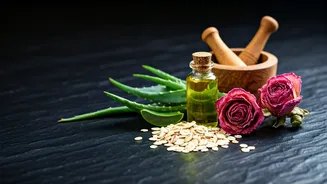
Before the advent of modern skincare laboratories and their complex formulations, ancient civilizations relied on nature's bounty for maintaining healthy skin and glossy hair. The Ayurvedic practice of 'ubtan' is a prime example, often featured in traditional pre-wedding Haldi ceremonies in India, demonstrating its profound skincare capabilities. Turmeric, a key ingredient, contains curcumin, a powerful antioxidant that actively combats acne-causing bacteria and diminishes stubborn pigmentation. Crafting this ancient paste is simple: combine a spoonful of chickpea flour (besan), a pinch of wild kasturi turmeric, some raw honey, and just enough rose water to achieve a smooth consistency. After applying it to the skin for 15 minutes, gently scrub it off to reveal a clear, radiant, golden complexion.