







Mars' Visual Marvels
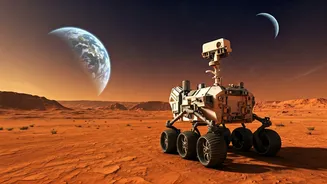
Recent online buzz has centered around captivating 4K panoramic footage from Mars, depicting the rugged, rust-colored landscapes of Jezero Crater. These
visually striking images, often presented as "actual footage from another world," are a testament to the sophisticated camera systems on NASA's rovers. While titles on platforms like YouTube and Reddit might suggest live broadcasts, these immersive experiences are the product of meticulous post-processing. Content creators skillfully assemble and enhance data captured by the rovers, bridging the gap between raw scientific information and engaging public narratives. It's important to understand that these creations are not unfiltered, real-time transmissions but rather expertly curated visual journeys designed to showcase the rover's capabilities and the Martian environment.
Advanced Imaging Technology
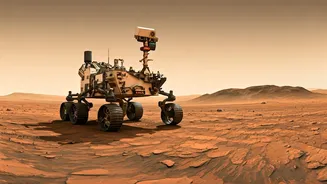
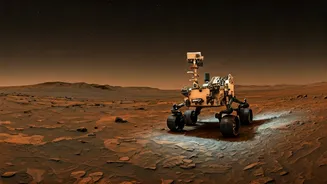
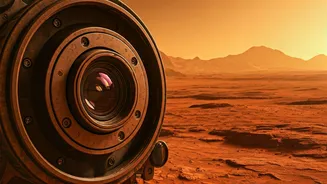
The rovers Perseverance and Curiosity are equipped with cutting-edge imaging hardware that makes these incredible visuals possible. Perseverance, for instance, boasts 23 cameras, including the Mastcam-Z stereo zoom system. This advanced system is crucial for capturing the detailed reconnaissance of the Martian terrain that we see. Recent panoramic footage, like the sweeping views of Jezero Crater, is compiled from over 50 individual observations. These observations utilize a suite of instruments such as SuperCam, PIXL, and WATSON, collectively gathering rich visual data. This raw data then undergoes a processing pipeline that rivals the computational photography found in high-end smartphones, involving careful stitching, color correction, and enhancement to create the seamless, immersive experiences shared with the public. This intricate process ensures that the final output is not just scientifically accurate but also visually compelling.
The Truth About 'Live' Mars
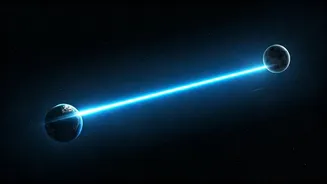
The concept of 'live' communication from Mars is fundamentally limited by the vast distances involved. Due to the speed of light, there's a significant delay in any communication signal traveling between Earth and Mars, ranging from 4 to 24 minutes each way, depending on the planets' orbital positions. This means that true real-time streaming of events as they happen on Mars is physically impossible. The stunning videos we encounter are therefore a result of advanced post-production techniques, where captured data is painstakingly processed and assembled. Despite this, these visually enhanced videos accurately represent the legitimate capabilities of the rover's imaging systems. When Perseverance meticulously captures intricate surface details or analyzes rock formations, it effectively demonstrates the power and potential of computational imaging, even if the final presentation is a carefully constructed narrative.
Consumer Tech's Future
The imaging technologies deployed on Mars rovers offer a fascinating glimpse into the future of consumer electronics. Features found on these interplanetary explorers, such as Mastcam-Z's stereo zoom capabilities and autonomous navigation systems, are increasingly appearing in advanced consumer gadgets like high-end drones and smartphones. The public's enthusiastic reception of processed Martian imagery highlights a strong and growing demand for sophisticated, space-grade imaging technologies in everyday devices. It's conceivable that your next camera upgrade might incorporate algorithms and processing techniques directly inspired by the challenges and successes of interplanetary photography. While the visual journeys to Mars may not be live, they are undeniably revealing imaging technologies that are not only out of this world but are also progressively making their way into the devices we use daily.