






The Evolutionary Arms Race
The ongoing battle against diseases transmitted by insects, like malaria, is fundamentally a race against evolution. While humans develop new methods to
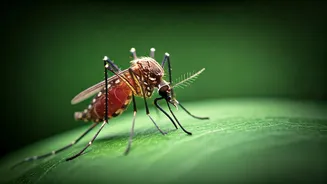
combat insect vectors, these organisms possess an extraordinary capacity to adapt. Insecticides, once potent tools for controlling mosquito populations, are becoming increasingly ineffective as mosquitoes evolve resistance. This phenomenon is particularly concerning for malaria, a disease that has historically been managed through insecticide use. Anopheles mosquitoes, the primary carriers of the malaria parasite, are demonstrating a remarkable ability to survive chemical exposures that were previously lethal, significantly escalating the risk for millions worldwide. Research highlights that this rapid adaptation is driven by genetic changes within mosquito populations, allowing them to survive and reproduce despite the presence of pesticides. In the mid-1990s, a majority of Anopheles mosquitoes in Africa were susceptible to pyrethroids, a widely used insecticide class. However, current populations often exhibit resistance to concentrations ten times higher than the previously lethal dose. This escalating resistance is not solely a consequence of direct mosquito control efforts; agricultural practices also inadvertently contribute by exposing mosquito populations to various chemicals, fostering a broader resistance. In certain regions of Africa, Anopheles mosquitoes are already showing resistance to insecticides crucial for malaria prevention, underscoring the urgency of understanding and addressing this evolutionary challenge.
Latin American Adaptation
While malaria's primary battleground has often been Africa, Anopheles mosquitoes and the Plasmodium parasite are also present in other regions, including South America, where insecticide resistance is less thoroughly studied. In this part of the world, Anopheles darlingi stands out as the predominant malaria vector. This mosquito species has undergone significant evolutionary divergence from its African counterparts, to the point where it might be considered a distinct entity. Recognizing this, a collaborative research effort involving scientists from eight different countries was initiated to investigate the genetic makeup of Anopheles darlingi, with a specific focus on recent adaptations influenced by human activities. Mosquitoes were gathered from sixteen diverse locations, spanning from Brazil's Atlantic coastline to the Andean regions of Colombia on the Pacific side. The findings revealed that Anopheles darlingi possesses exceptionally high genetic diversity, a characteristic that signals the existence of vast mosquito populations. A species with such an extensive gene pool is inherently well-equipped to adapt to new environmental pressures. The likelihood of encountering a beneficial mutation that confers a survival advantage is considerably higher within a large population, as such a mutation is less likely to be lost by chance. This genetic resilience provides a buffer against random events, allowing advantageous traits to persist and spread more effectively. In stark contrast, other insect species, like certain historical populations of Anopheles that failed to develop resistance to DDT, neared extinction. This highlights how insect evolution, amplified by sheer numbers, is far more efficient than in smaller populations of animals like birds. Indeed, the study observed clear indicators of adaptive evolution within the resistance-related genes of Anopheles darlingi over the past few decades.
Detoxifying the Poisons
Insecticides like pyrethroids and DDT operate by targeting specific molecular sites within insect nerve cells – the ion channels responsible for nerve signal transmission. These chemicals disrupt the normal function of these channels by forcing them to remain in an open state, leading to continuous nerve stimulation and ultimately, death. Insects, however, can develop resistance by modifying the structure of these target channels, rendering the insecticides ineffective. However, the research on Anopheles darlingi in South America revealed a different primary mechanism for insecticide resistance. Earlier genetic analyses, as well as the current study, did not find widespread alterations in the target ion channels. Instead, the primary adaptation observed involves a group of genes that encode enzymes responsible for breaking down toxic compounds. These P450 genes, when highly active, are frequently associated with insecticide resistance in various mosquito species. Significantly, this same cluster of P450 genes has independently undergone changes at least seven times across South America since the widespread introduction of insecticides in the mid-20th century. Further evidence comes from French Guiana, where a distinct set of P450 genes showed signs of adaptation, strongly linking these enzymes to the mosquitoes' ability to cope with insecticides. When researchers exposed mosquitoes to pyrethroids in controlled environments, variations in the P450 genes among individual mosquitoes correlated with how long they survived, reinforcing this connection. Interestingly, widespread insecticide application for malaria control has been less consistent in South America compared to other regions, leading to speculation that agricultural pesticides might be a more significant indirect driver of this evolution. The strongest evidence of adaptation was found in areas with prevalent farming activities, suggesting that exposure to agricultural chemicals plays a crucial role.
Innovating Vector Control
Despite the growing challenge of insecticide resistance, effective mosquito control remains a cornerstone of reducing the burden of diseases like malaria. As traditional methods face diminishing returns, new and innovative approaches are being developed and piloted. Some countries are actively experimenting with gene drive technologies, which involve introducing a genetic modification into a mosquito population designed to either drastically reduce their numbers or impair their ability to transmit the malaria parasite. These cutting-edge prospects are undeniably exciting, offering potential breakthroughs in vector control. However, the very adaptability that allows mosquitoes to evade insecticides could also present a significant hurdle for these novel genetic strategies. To combat this relentless evolutionary pressure, researchers and public health officials are revisiting and refining existing mosquito control methodologies. A critical component of this modernization is the continued use of genome-scale sequencing to identify and monitor new or unexpected evolutionary responses within mosquito populations. The risk of adaptation is amplified when insects face constant and intense selection pressure. Therefore, strategies to thwart resistance include minimizing exposure, strategically rotating different classes of pesticides, and staggering their application. Ultimately, succeeding in the fight against evolving insecticide resistance will necessitate a coordinated and multifaceted approach, combining vigilant monitoring with the agility to adapt our strategies accordingly. Unlike the reactive nature of evolution, humans possess the capacity for foresight and planning, which will be essential in staying ahead of these adaptable vectors.