






Alpine Meadows' Delight
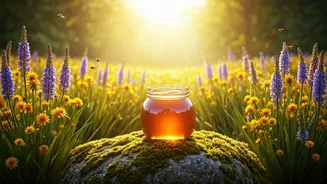
In the picturesque Hallstatt Region of Austria, the alpine meadows flourish with a diverse array of wildflowers. This rich floral tapestry provides a pristine
foraging ground for bees, yielding a honey that is both delicate and distinctly floral. Beekeepers here meticulously harvest this nectar from bees that navigate the untouched mountain landscapes. The resulting honey is a light-hued, fragrant variety, embodying the pure essence of the alpine environment. It's a testament to the symbiotic relationship between the region's natural beauty and its age-old beekeeping traditions, offering a taste that is as refreshing as a mountain breeze.
Himalayan Floral Nectar
Journey to the Kangra Valley in India, a serene landscape nestled at the foothills of the majestic Himalayas. This region is renowned for producing raw, unadulterated honey, a product of bees diligently foraging on a wide spectrum of mountain flora. The diverse floral sources imbue the honey with a deep, complex flavour profile and are believed to contribute to its natural wellness properties. The honey from Kangra Valley is celebrated not only for its exquisite taste but also for its inherent purity, making it a prized natural product for those seeking wholesome goodness directly from the earth.
Ancient Thyme's Aroma
Just a stone's throw from Athens lies Mount Hymettus in Greece, a location with a hallowed reputation for its exceptionally aromatic thyme honey. The mountain's slopes are carpeted with wild herbs and thyme, which lend the honey its characteristic rich fragrance and a beautiful golden hue. This particular honey has a legacy that stretches back to the annals of ancient Greek history, where it was highly esteemed for its flavour and potential benefits. Experiencing Mount Hymettus honey is like tasting history, a direct connection to the ancient world through its enduring natural bounty.
Mangrove's Salty Sweetness
The sprawling mangrove forests of the Sundarbans, shared between India and Bangladesh, are the origin of a truly unique wild honey. Local artisans, known as 'mouals', embark on adventurous expeditions deep into these dense mangrove ecosystems to collect honey from the resilient mangrove blossoms. This honey possesses a distinctive character, being darker in colour and offering a complex flavour profile that balances sweetness with a subtle saltiness. Its rarity and unusual taste make it a highly sought-after delicacy, reflecting the unique biodiversity of its origin.
Tasmania's Leatherwood Gem
Australia's island state, Tasmania, is the exclusive source of one of the world's most distinctive and sought-after honeys: Leatherwood Honey. This precious nectar is derived from the blossoms of the ancient leatherwood trees, which thrive predominantly in the island's lush rainforests. The honey is characterized by a potent, spicy floral aroma and a flavour that is both assertive and complex, setting it apart from more common varieties. Its limited availability and unique sensory profile have cemented its status as a globally prized honey.
Mayan Melipona's Treasure
The Yucatán Peninsula in Mexico holds a rich beekeeping heritage, particularly with the native stingless bee, Melipona beecheii. For centuries, Mayan communities have revered and cultivated these bees, harvesting a rare honey that offers a unique sensory experience. This special honey is distinguished by a slight sourness that complements its inherent sweetness, and it is traditionally valued for its medicinal properties. The cultivation of Melipona beecheii honey represents a deep cultural connection to ancient practices and the extraordinary biodiversity of the region.