


Volcanic Heartbeat
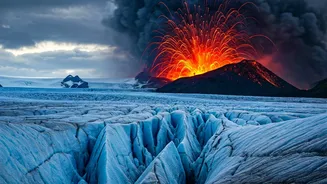
Iceland's fiery temperament is a defining characteristic, earning it the 'fire' part of its famed moniker. The island sits atop a geological hotspot, leading
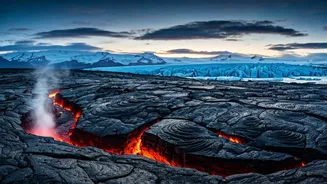
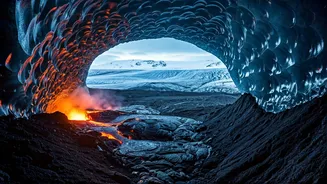
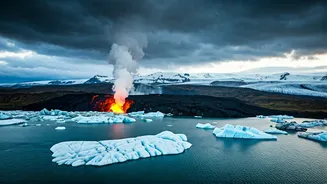
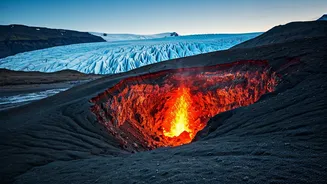
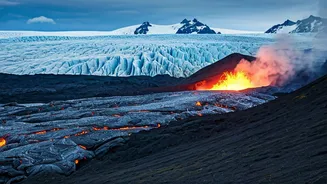
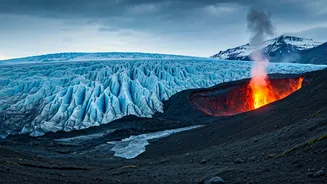
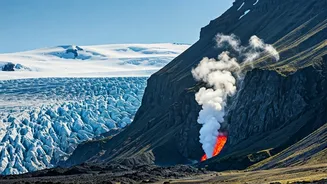
to frequent volcanic activity. Regions like the Reykjanes Peninsula are home to volcanoes that periodically erupt, spewing molten lava that contrasts dramatically with the stark, often snow-dusted or barren surroundings. Historic eruptions, such as the one at Eyjafjallajökull, serve as powerful reminders of the earth's raw energy bubbling just beneath the surface. These fiery events are not isolated occurrences but are intrinsically linked to the island's glacial presence, often resulting in dramatic subglacial eruptions where molten rock meets ice, creating explosive interactions that further sculpt the land. The visual spectacle of glowing lava flows against a backdrop of ice or dark terrain is a testament to this potent combination.
Glacial Dominion
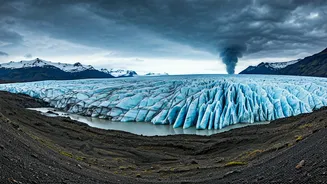
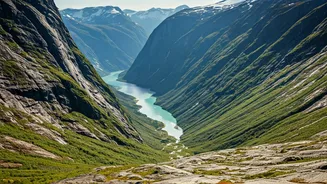
Complementing its volcanic intensity, Iceland is profoundly shaped by its massive glaciers, embodying the 'ice' in its nickname. These colossal frozen expanses dominate large swathes of the country, with Vatnajökull standing out as the largest ice cap in Europe, extending over thousands of square kilometers. These ancient glaciers are not static; they are dynamic forces that relentlessly carve out valleys and fjords over millennia. As they gradually melt, they give rise to stunning glacial lagoons filled with icebergs. The sheer scale of these ice formations is awe-inspiring, a stark white contrast to the dark volcanic rock that also characterizes the island. The interplay between the frozen giants and the geothermal heat beneath them creates a unique environment where ice and fire coexist in a breathtaking display of nature's power.
Diamond Beaches & Lagoons
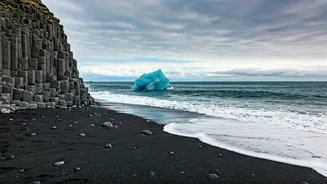
The dynamic relationship between Iceland's fire and ice manifests in some of its most spectacular natural wonders. At the edge of Vatnajökull, one can witness the breathtaking spectacle of icebergs calving from the glacier into the Jökulsárlón lagoon. These crystalline fragments then drift slowly towards the Atlantic Ocean. Nearby lies the celebrated Diamond Beach, a surreal landscape where the black volcanic sand serves as a dramatic canvas for these icebergs. Scattered across the dark pebbles, the ice chunks glitter like precious jewels, especially when catching the light. This striking juxtaposition of dark sand and luminous ice, set against the backdrop of the powerful ocean waves, offers a truly magical and photogenic experience, highlighting the island's unique geological narrative.
Celestial & Coastal Wonders
Beyond the immediate interplay of fire and ice, Iceland offers other natural phenomena that enhance its ethereal beauty. The aurora borealis, or Northern Lights, frequently paints the night sky with vibrant colors, particularly during the darker winter months. This celestial display can be observed in myriad settings, from above vast glaciers to across the stark volcanic landscapes and even illuminating the black sand shores. These shores themselves are remarkable, often characterized by black pebble beaches and imposing basalt columns, direct evidence of the island's volcanic origins. These beaches, especially during twilight or darkness, become prime locations for witnessing the aurora, adding another layer of magic to Iceland's already captivating natural tapestry. The island continues to be a photographer's paradise, constantly evolving through the powerful forces of nature.