









A Strategic Boost for Indian Space-Tech
In a major endorsement of India's private space technology sector, the Technology Development Board (TDB), part of the government's Department of Science & Technology, has entered into a significant funding agreement with Astrome Technologies. The Rs
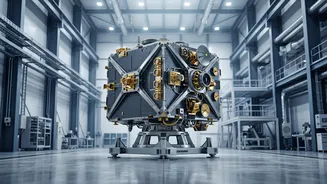
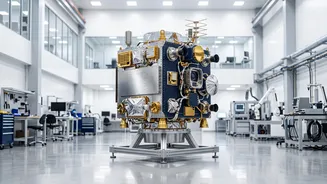
64.05 crore infusion, provided as optionally convertible debt from the Research, Development and Innovation (RDI) Fund, represents half of the total project cost of Rs 128.11 crore. This isn't just another funding round; it's a clear signal of the government's strategy to partner with agile startups for critical national security infrastructure. The project aims to develop and deploy a constellation of AI-enabled microsatellites for Electronic Intelligence (AI-ELINT), a crucial capability for monitoring electronic signals over areas of strategic interest.
Who is Astrome Technologies?
Founded in 2015 by Indian Institute of Science (IISc) alumni Dr. Neha Satak and Dr. Prasad Bhat, Astrome is a deep-tech company incubated at the prestigious Bengaluru institute. While the company has developed a range of products, its core expertise lies in millimeter-wave wireless communication. The founders' journey began with the idea of using satellite technology to bridge India's digital divide. This led to the development of their flagship terrestrial product, GigaMesh, a multi-beam radio system that provides fibre-like internet speeds wirelessly, which is cheaper and faster to deploy than traditional fibre optic cables, especially in rural and semi-urban areas. This expertise in wireless data transmission is now being scaled for space applications.
Decoding the AI-ELINT Satellite Project
The government funding is specifically earmarked for a sophisticated project that combines three key technologies. First is the development of an Electronic Intelligence (ELINT) payload, which is the hardware on the satellite designed to detect and analyse electronic emissions. Second is the creation of AI-powered software on the ground to rapidly process the vast amounts of data collected by the satellites. Finally, the project includes building inter-satellite communication links, allowing the spacecraft to talk to each other and function as a cohesive network, providing persistent surveillance over large areas without gaps. The plan involves deploying a constellation of 50kg-class microsatellites into Low Earth Orbit. The ultimate goal is to take this technology from a laboratory-proven concept (Technology Readiness Level 4) to a fully operational system proven in space (TRL-9).
Why This Matters for National Security
Developing a sovereign satellite intelligence capability is a high priority for India. Relying on foreign systems for critical intelligence gathering carries inherent risks and limitations. By funding Astrome, the government is catalysing the creation of an indigenous system that provides greater control and security. An AI-ELINT constellation gives defence forces the ability to monitor adversary movements and communications from space, a significant strategic advantage. This project aligns perfectly with the 'Make in India' and 'Atmanirbhar Bharat' (self-reliant India) initiatives, fostering domestic expertise in dual-use technologies that serve both national security and have potential for future commercial applications. The funding mechanism, through the TDB, is designed specifically to support such high-risk, high-reward deep-tech ventures that can bolster the country's strategic capabilities.
The Bigger Picture: A Maturing Ecosystem
This agreement is more than a vote of confidence in a single company; it reflects the growing maturity of India's entire private space and defence-tech ecosystem. Government bodies like the TDB and the Innovations for Defence Excellence (iDEX) framework are increasingly turning to startups to solve complex challenges, shortening development cycles and infusing the sector with fresh innovation. For a startup like Astrome, this government backing provides not just capital but also immense credibility, de-risking the project for other potential investors and partners. As Astrome works to put its AI-powered eyes in the sky, its success could pave the way for a new generation of Indian deep-tech companies building cutting-edge solutions for both the nation and the world.