







An Invisible Crisis Above
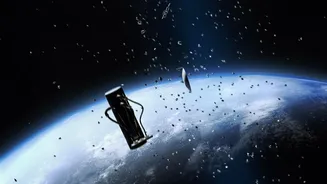
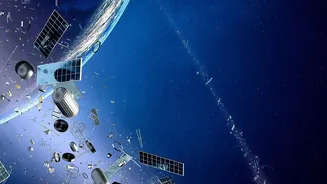
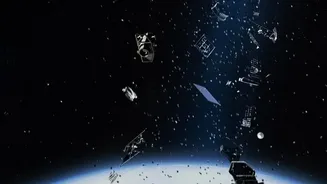
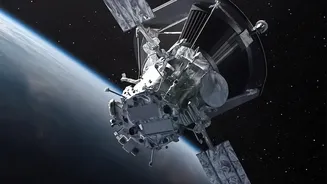
For decades, we have launched rockets, deployed satellites, and conducted missions in space, often leaving behind a trail of non-functional objects. This space junk includes everything from spent rocket stages and defunct satellites to tiny flecks of paint.
There are tens of thousands of tracked objects larger than a softball, and millions of smaller, untraceable pieces, all whipping around the planet at speeds of up to 28,000 kilometres per hour. At that velocity, even a small fragment can strike an active satellite with catastrophic force, potentially triggering a disastrous chain reaction of collisions known as the Kessler Syndrome, which could render entire orbits unusable. This invisible crisis not only endangers future space missions and astronaut lives but also threatens the vital satellite infrastructure our modern world relies on for communication, navigation, and climate monitoring.
The Cleanup Crew's Toolkit
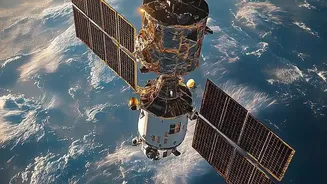
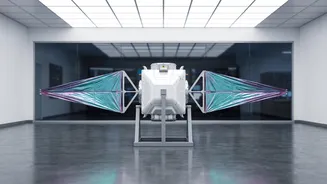
To tackle this cosmic mess, a suite of 'active debris removal' (ADR) technologies is in development. These are not simple trash collection methods; they are highly advanced robotic and autonomous systems. One major area is tracking, where ground-based radars and AI-powered platforms monitor debris and predict collision risks. For capture, companies are testing everything from robotic arms that can grapple a dead satellite to giant nets and harpoons that ensnare targets. Other futuristic concepts include space-based lasers that 'nudge' debris into a new trajectory, causing it to burn up in the atmosphere. Once captured, the goal is 'de-orbiting'. This can be achieved with space 'tugs' that drag junk down to a fiery atmospheric re-entry or push it into a distant 'graveyard orbit' where it poses less risk.
The Push from Regulation
For a long time, dealing with space debris was based on a voluntary 25-year guideline for de-orbiting satellites. However, with compliance rates hovering around 50%, regulators are now taking a harder line. A game-changing move came from the U.S. Federal Communications Commission (FCC), which mandated that satellites under its jurisdiction launched after September 2024 must be de-orbited within five years of their mission's end. The European Space Agency (ESA) has adopted a similar five-year rule and a 'Zero Debris' approach for its future missions. These regulations are creating a non-negotiable legal and financial incentive for satellite operators to have a cleanup plan. This regulatory push is a primary driver, effectively creating a mandatory market for companies that can provide end-of-life services for satellites.
The Pull of Commercial Demand
While regulation provides the 'stick', commercial need provides the 'carrot'. The explosion of satellite mega-constellations from companies like SpaceX and OneWeb has dramatically increased the number of active assets in Low Earth Orbit (LEO). These multi-billion dollar networks are too valuable to be left vulnerable. Operators have a clear financial incentive to protect their investments from debris-related damage or destruction. As such, a commercial market for 'debris removal as a service' is beginning to take shape, with startups partnering to offer multi-object removal missions. This demand is not just for active removal but also for better tracking and collision avoidance services, which currently form the bulk of the market's revenue. For satellite operators and their insurers, paying for cleanup is becoming a necessary cost of doing business.
The High Cost of a Clean Orbit
Despite the clear need, the space debris removal market faces significant hurdles. The primary challenge is cost. A single debris removal mission can cost tens of millions of dollars today. For example, ESA's ClearSpace-1 mission is budgeted at approximately €86 million to remove just one piece of debris. Furthermore, complex legal questions persist. Under international law, space objects belong to the launching state in perpetuity, meaning a third party cannot simply remove another country's defunct satellite without permission. This creates a legal minefield. Finally, many of the advanced capture technologies are still in the demonstration phase, requiring significant investment and testing before they can become routine operational services. Until costs come down and legal frameworks are clarified, the market's growth will remain constrained.