




A Disaster Unfolds
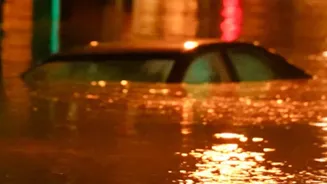
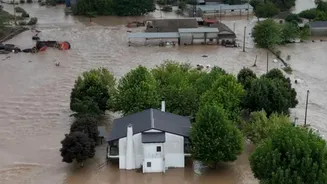
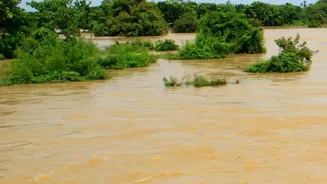
On August 26, 2026, a massive section of rock and glacier ice broke away from a mountain near the Nepal-China border, unleashing a devastating torrent of water, sediment, and debris. The resulting flash floods tore through the Trishuli River valley, killing
more than 1,300 people and leaving over 5,000 missing. Entire communities, vital highways, bridges, and hydropower projects were destroyed, highlighting the extreme vulnerability of life in these mountain corridors. This was not just a natural disaster; new analysis suggests it was a disaster preconditioned by human-induced global warming.
What the New Science Says
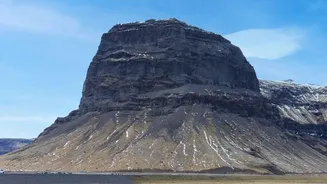
A report from the World Weather Attribution research group concluded that climate change was a likely contributing factor. Rising temperatures are rapidly thinning glaciers and, crucially, thawing permafrost—the permanently frozen ground that acts like cement for fractured mountain rock. As this 'glue' melts, it destabilises entire mountainsides. While researchers note that a 2015 earthquake may have also weakened the rock, the persistent warming created the conditions for the collapse. The disaster demonstrates how climate change is altering the very stability of the mountains themselves, creating unpredictable hazards that can overwhelm even modern early warning systems.
A 'Third Pole' in Peril
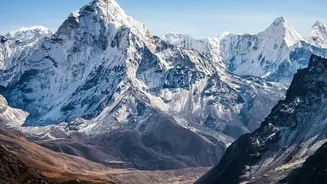
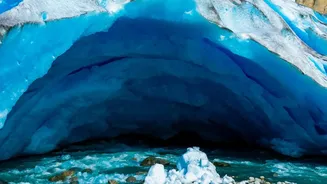
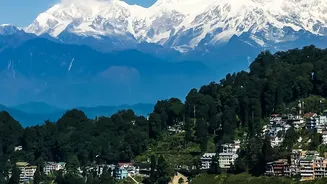
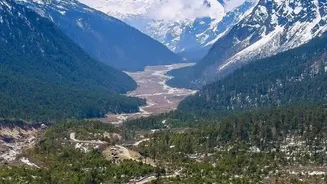
The Himalayas, often called the 'Third Pole' for holding the largest volume of ice outside the polar regions, are melting at an alarming rate. A recent study highlighted that glaciers in the region are now melting 65% faster than they did a decade ago. This accelerated melt is leading to the rapid formation and expansion of glacial lakes, which are often held back by unstable natural dams of rock and debris. These lakes can burst without warning, causing Glacial Lake Outburst Floods (GLOFs). Scientists have identified thousands of such lakes across the Himalayas, with dozens posing a high risk to downstream communities.
A Shared Threat for India
The crisis unfolding in Nepal's mountains is a direct threat to India. The rivers that are the lifeline for hundreds of millions in the Indo-Gangetic plain originate in the Himalayas. Unstable flows, GLOFs, and accelerated melt threaten India's water security, agriculture, and hydropower infrastructure. Research warns that the region is approaching 'peak water'—a point where river flows, after temporarily increasing due to glacial melt, will begin a steady, irreversible decline. Nearly 200 glacial lakes in India have already been identified as high-risk. The Himalayan region underpins over 20% of India's GDP, making its stability a matter of national economic security.
The Urgent Race for Adaptation
The scale of the August disaster shows that existing adaptation measures are not enough. Experts and officials are calling for a fundamental shift from a reactive to a proactive strategy. This includes creating a UN-backed scientific body for continuous monitoring of high-altitude hazards across the entire Himalayan arc. Other proposed strategies include building more resilient infrastructure, establishing robust early warning systems for GLOFs, and, where necessary, the planned and dignified relocation of communities from the most high-risk zones. The challenge is immense, requiring significant investment and, critically, cross-border cooperation between all nations sharing the Himalayan ecosystem.